
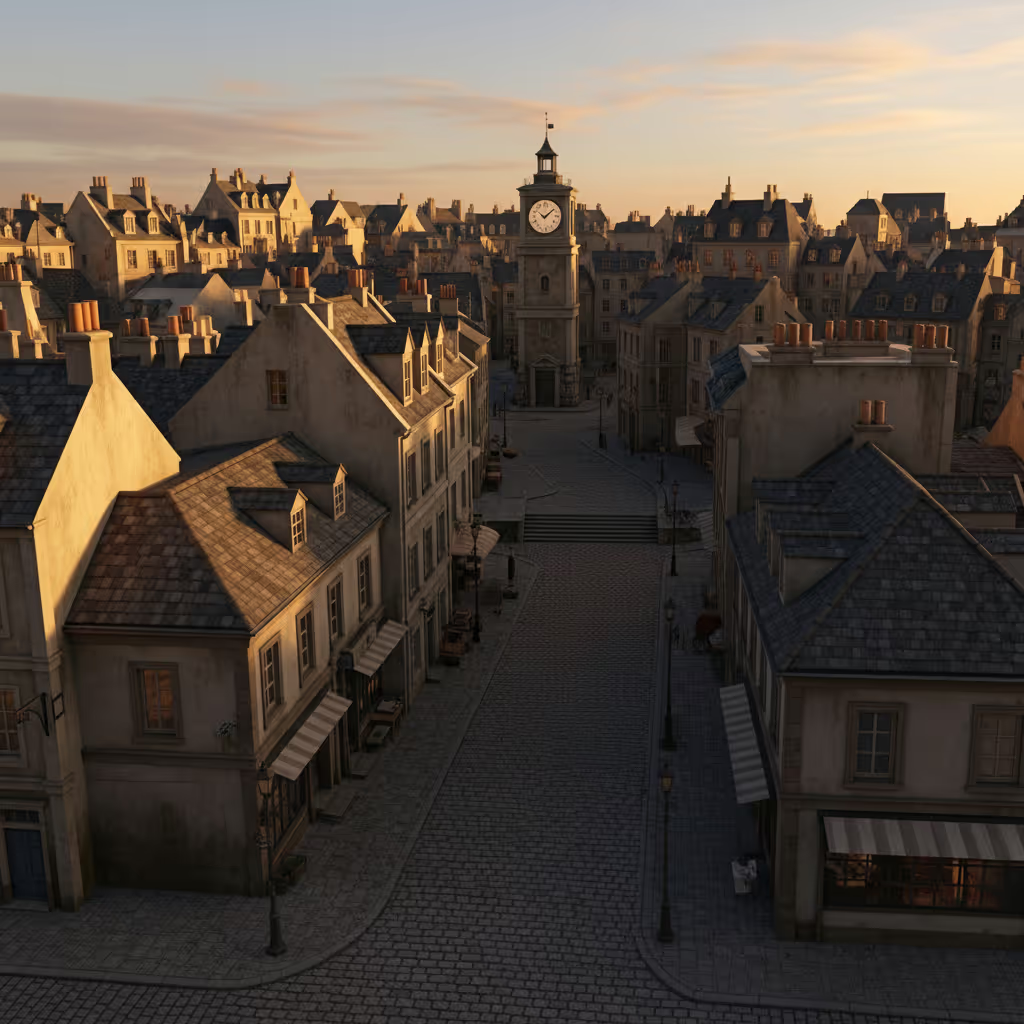
The town was there before the story arrived. It had opinions about the weather. It had a bakery that everyone agreed was slightly overpriced but continued to patronize anyway, because the alternative was a longer walk and the bread was, on balance, worth it. The clock tower had been wrong for eleven years, and nobody had fixed it, not because they lacked the means but because the town had quietly decided that eleven years was long enough to constitute a tradition. None of this appears in the first chapter. Most of it never appears at all. But the reader can feel it — the particular weight of a place that was already fully itself before anyone thought to write it down. To build a fictional town that feels real is not a matter of description. It is a matter of implication. And implication, in storytelling, is considerably harder than description.
The difference between a fictional town that works and one that doesn't is rarely visible on the page. It is felt. The town that works has edges the story never reaches — streets the characters don't walk down, histories nobody explains, residents who appear once and are clearly doing something interesting that the narrative has no time to follow. The town that doesn't work has exactly as much as the story needs and nothing more, which is precisely the problem. A place that exists only to serve the plot is a setting. A place that seems to exist regardless of the plot is somewhere worth visiting. To build a fictional town that feels real, a writer must construct far more than they will ever use.
The Details Nobody Asked For
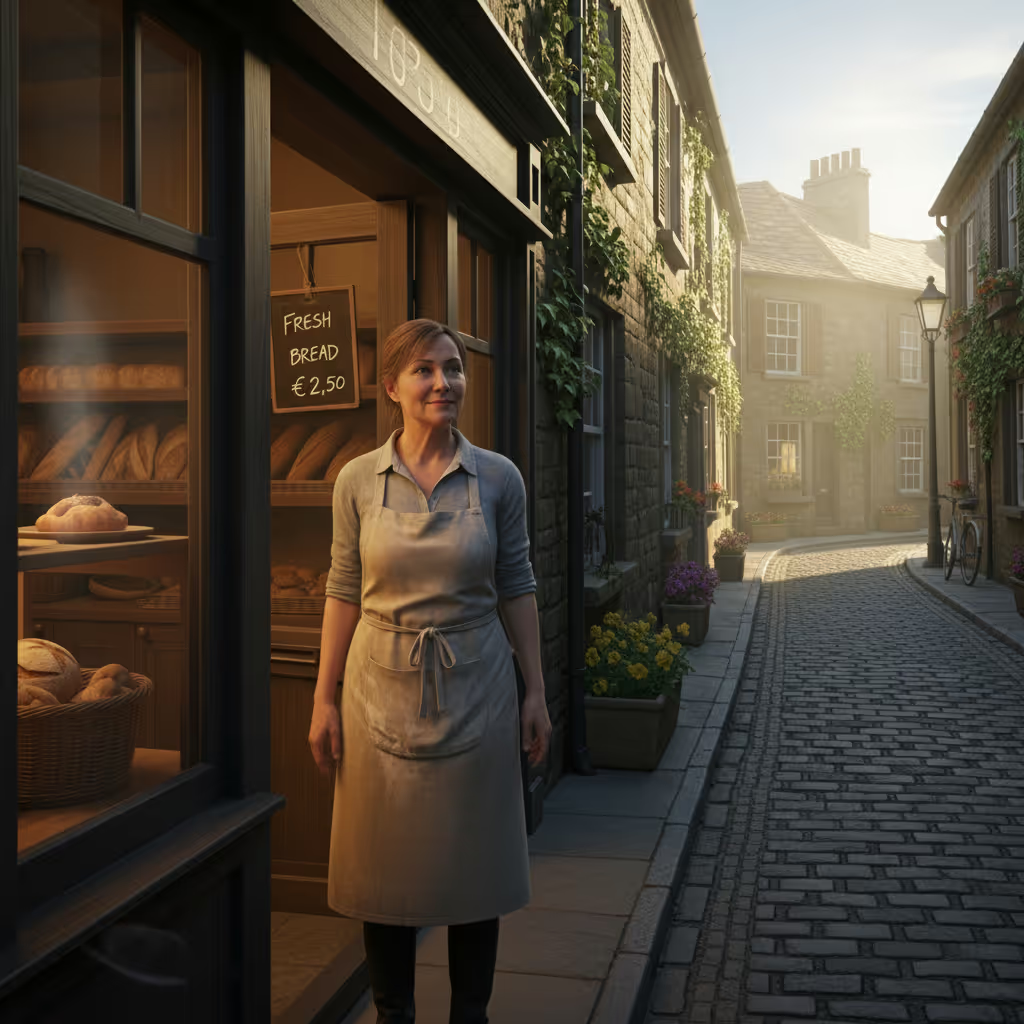
The fictional towns readers remember best are full of information that is technically unnecessary. A minor character has a specific and unrequested opinion about the correct way to store root vegetables. A street has a name that suggests a history the story never explains. A building is described as having been something else before it was what it is now, without any further elaboration on what that something else was.
These details do not advance the plot. They do not develop the main characters. They exist for one purpose only — to suggest that the world was there before the story began and will continue after it ends. A town that contains only what the narrative requires feels constructed. A town that contains slightly more than the narrative requires feels inhabited.
To build a fictional town that feels real, the writer must be willing to invent details they will never use — not as decoration, but as evidence. The reader does not need to see the evidence directly. They need only to sense that it exists, somewhere just offstage, which is enough to make the world feel solid beneath the story's feet.
The Clock That Has Been Wrong for Eleven Years
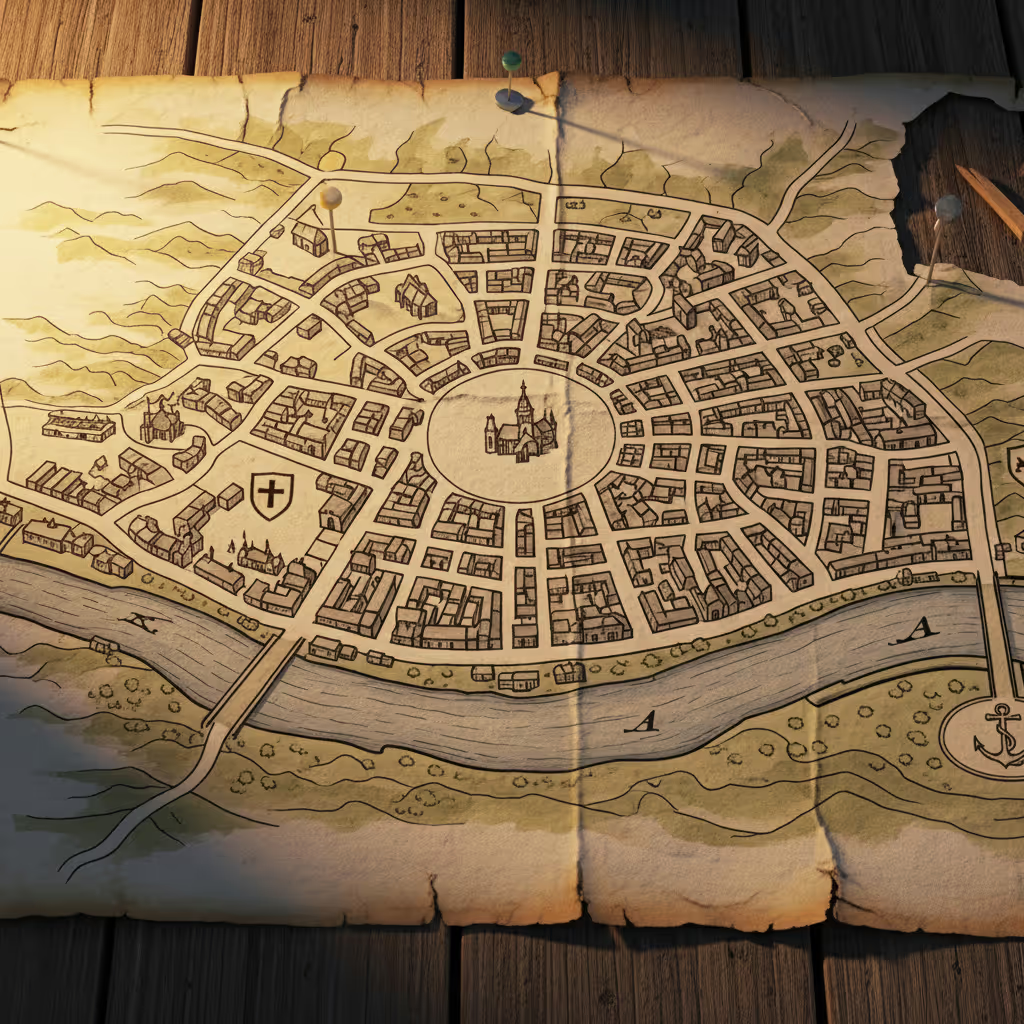
Every town that feels genuinely real has at least one thing that is slightly wrong and has been wrong for long enough that nobody questions it anymore. A clock that keeps its own time. A road that goes somewhere it was not originally intended to go. A festival that has outlasted the reason it was started and is now simply what people do in the second week of autumn, because that is what people have always done.
These details matter because they suggest the passage of time without requiring the story to describe it. A town where everything works correctly and makes perfect sense is a town that was recently assembled. A town with a few carefully chosen imperfections that have calcified into tradition is a town that has been lived in — and lived-in places feel real in a way that perfect ones never quite manage.
Writing this kind of detail into a fictional world requires resisting the instinct to explain. The clock is wrong. That is sufficient. The reader will supply the history, which is always more vivid than anything the writer could provide, because it belongs to the reader entirely.
What the Characters Don't Notice

The most reliable test of whether a fictional town feels real is what the characters take for granted. A character who grew up somewhere does not notice it the way a visitor does. They do not observe the architecture or remark on the local customs. They move through the town the way people move through places they have always known — without looking, navigating by habit, occasionally irritated by something so familiar it has stopped being noticeable.
When characters treat their world as ordinary, the reader treats it as real. The town becomes background in the best possible sense — not ignored, but assumed. And assumed worlds have a solidity that described ones rarely achieve.
Building a fictional town that feels like it existed before the story is, in the end, an act of restraint as much as invention. There is a strong temptation to show everything — to demonstrate the world's completeness by filling every corner of it. The towns that work best leave the corners empty. They trust the reader to understand that the corner exists, that something is probably in it, and that the story simply has other places to be. That trust, extended consistently across an entire world, is what makes a fictional town feel not constructed but discovered — which is the only condition under which a reader will truly believe in it.
The best fictional towns are modest about their own existence. They do not announce themselves. They do not pause to be admired. They simply continue, at the edges of the story, being what they have always been — a place where the bakery is slightly overpriced, the clock has been wrong for years, and nobody has thought to mention either of these things because they stopped being remarkable a very long time ago. A town like that does not need to be described. It only needs to be trusted. And readers, given a world that trusts them back, have a long and reliable history of making it entirely real on their own.
Readers curious about what a fictional town built on these principles actually looks and feels like may enjoy this post about A Tourist's Guide to Valcronis — where a town that existed long before its story arrives greets visitors with considerable civic enthusiasm.