
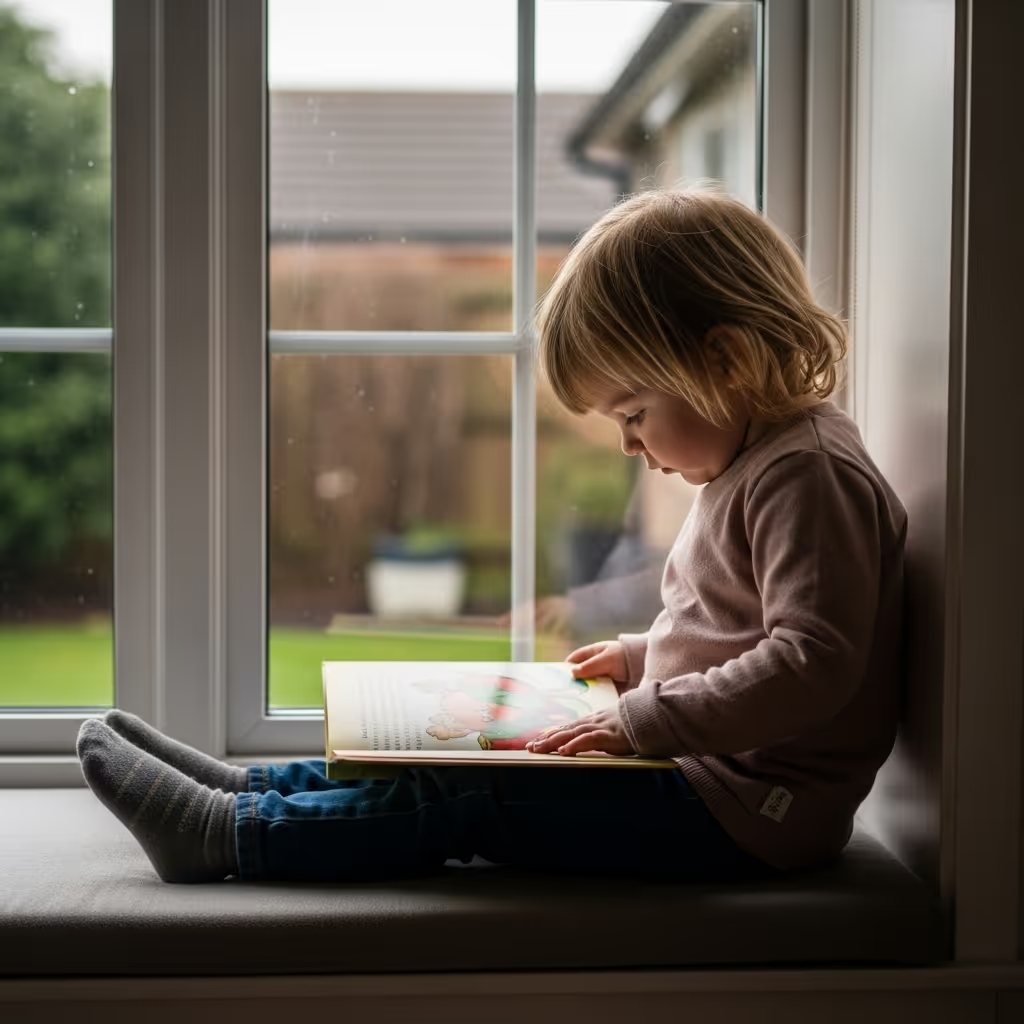
It happens without announcement. There is no ceremony, no formal handover, no moment where the adult closes the book and the child opens it and everyone agrees that something significant has just occurred. It simply happens — quietly, on an unremarkable evening, in the middle of a story that was supposed to require assistance. The child has reached the end of the page before anyone turned it. They have read ahead. They know what happens next, and they know it not because someone told them but because they found it themselves, in the particular silence of a story that was suddenly, entirely theirs. When a child starts reading for themselves it does not feel like a milestone. It feels, from the inside, like something that was always going to happen and simply chose this moment to begin.
The transition from being read to and reading independently is one of the quieter revolutions in a child's life. It does not arrive with obvious drama. It accumulates — through repeated exposure to stories, through the gradual familiarity with how sentences work and where they tend to go, through the slow building of confidence that comes from knowing a great many words and discovering, one evening, that those words are sufficient. When a child starts reading for themselves the stories that preceded that moment did not stop mattering. They became the foundation of it.
What Being Read To Actually Does
A child who is read to regularly is receiving considerably more than a story. They are learning, without being taught, how narrative works — where it slows down and where it accelerates, how dialogue sounds when it belongs to different characters, what a sentence feels like when it is building toward something and what it feels like when it has arrived. None of this is conscious. None of it requires explanation. It accumulates in the background of enjoyment, quietly and efficiently, while the child is engaged in the considerably more pressing business of finding out what happens next.
This is why the stories chosen for reading aloud matter more than they might appear to. A child who has been read stories with strong, distinctive voices — stories where the language itself is pleasurable, where the rhythm of a sentence is part of the experience — arrives at independent reading with an instinct for good writing that they cannot name but will apply immediately. They know, without knowing how they know, when a sentence is doing something interesting. They felt it, many times, before they could produce it themselves.
Parents and educators who read aloud with care and consistency frequently observe that when a child starts reading for themselves they do not choose randomly. They reach for books that feel like the ones they were given — books with the same quality of attention, the same seriousness about language, the same willingness to be genuinely funny or genuinely surprising without announcing either intention in advance.
The Quiet Moment Before Independence
There is a period just before a child starts reading for themselves that is, in retrospect, entirely visible — though it is rarely noticed at the time. The child begins to follow the words on the page while being read to. Their eyes move ahead of the reader's voice. They anticipate line breaks. They occasionally correct a misread word with the quiet authority of someone who checked and found a discrepancy.
This is not showing off. It is the child discovering that the marks on the page and the sounds in the air are the same thing — that the story does not live exclusively in the reader's voice but is also present, in a different but equally accessible form, in the text itself. The discovery tends to arrive as a private revelation rather than a public one. The child does not announce it. They simply begin, in small ways, to use it.
The transition, when it completes itself, is therefore not a sudden leap but the final step of a journey that has been underway for some time. A child who starts reading for themselves has not just acquired a skill. They have claimed access to something they already knew existed — a world of stories that was always available, that required only one more thing from them, and that was waiting with considerable patience for them to be ready.
What the First Independent Book Actually Does
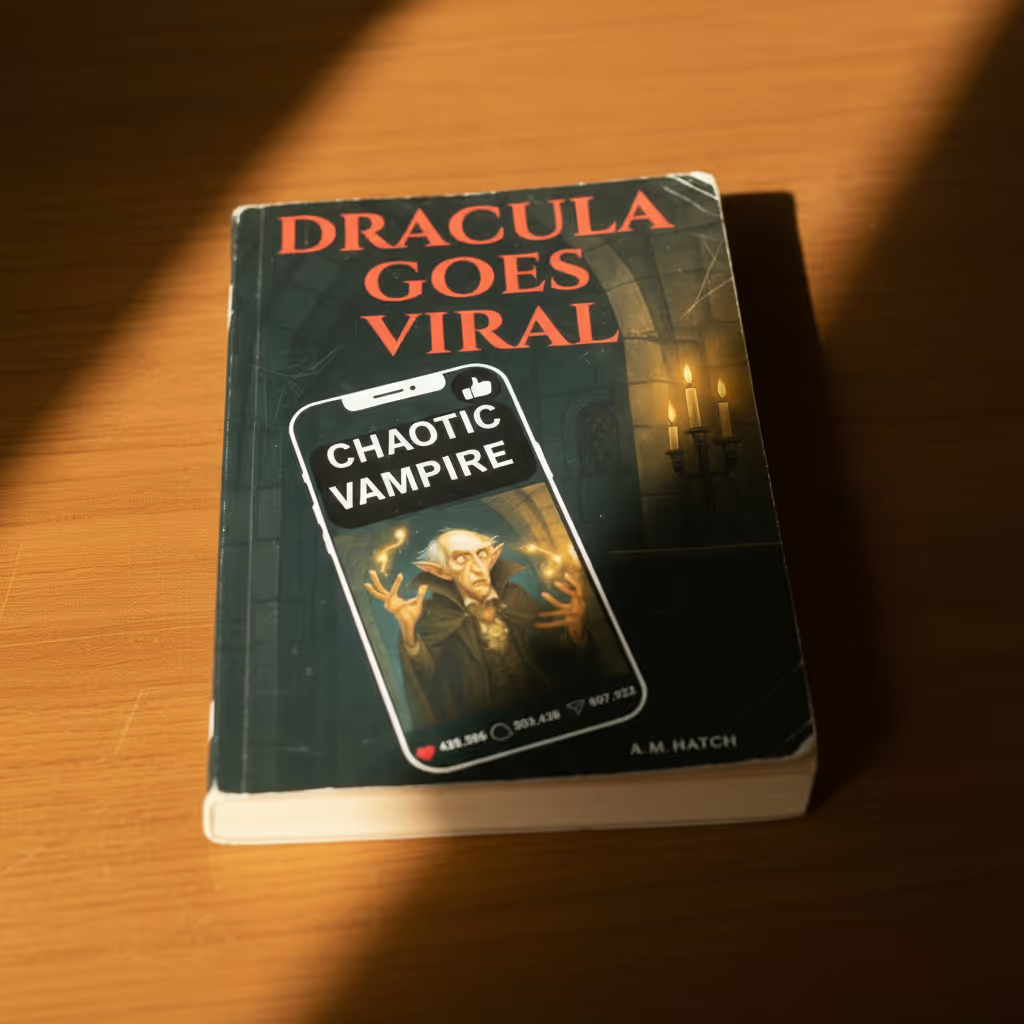
The first book a child reads entirely alone occupies a different place in their memory than almost any other book. It becomes the one they return to — the story that was theirs from the first page, not because someone assigned it but because something about it said, quietly and with considerable confidence, that it was exactly the right book for exactly this moment. The stories worth finding tend to have that quality. They do not wait to be discovered so much as they make themselves impossible to overlook.
This changes the relationship between child and book in a way that does not reverse. The child has learned that stories are not delivered — they are retrieved. They are available, quietly and without condition, to anyone willing to do the small work of going to find them. That knowledge, once acquired, tends to expand. One book leads to another. The independent reader discovers, with some surprise, that the supply is not limited — that the number of stories available to someone willing to read for themselves is, for all practical purposes, without end.
Writing stories that a child will choose to read alone — after the read-aloud years, after the guidance, after the shared evenings on the sofa — requires understanding what that child is looking for when they reach for a book independently. They are looking for the same quality of attention they received when someone read to them with care. They are looking for a story that takes them seriously. And they will know, within the first paragraph, whether they have found it.
Every child who starts reading for themselves carries, without knowing it, every story they were ever read aloud. Those stories are not behind them. They are underneath — the foundation on which the independent reader stands, the accumulated weight of all the evenings someone sat beside them and said, in effect, this is what a good story feels like, and this, and this. The first book a child reads alone is not a departure from that. It is its completion. And the reader they become afterward — the one who reaches for books in quiet moments, who reads ahead, who laughs alone in rooms where nobody else can hear — began, without question, on an unremarkable evening when someone opened a book and started reading out loud.
Readers who find this transition compelling may enjoy this post about why children ask to hear the same story again and again — which explores what happens in the reading-aloud years that makes the independent leap possible.