
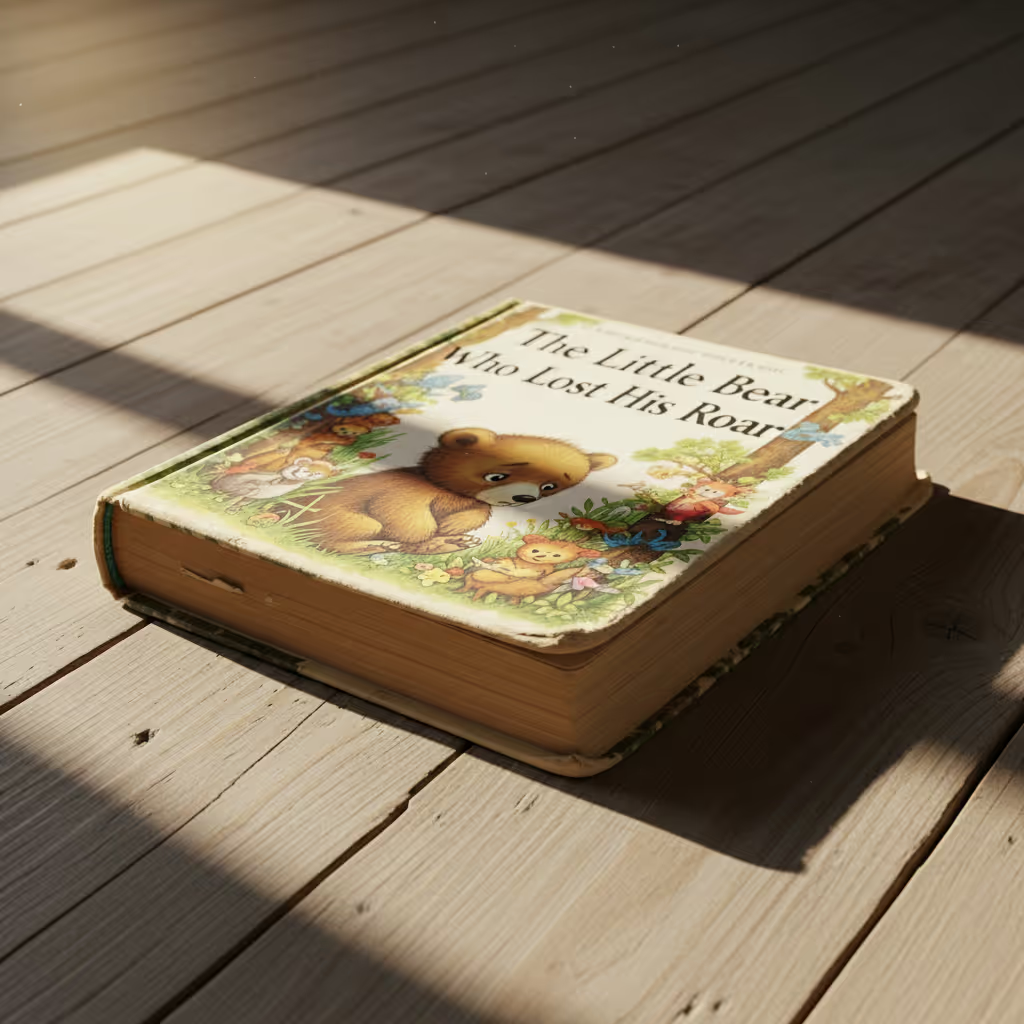
The book has been read. The ending has been reached. The dragon was defeated, the journey was completed, and everyone arrived home safely, which was the expected outcome and was received with appropriate satisfaction. And then, before the last page has fully settled, comes the request. Again. Not a different book. Not a new adventure. The same one. With the same words, in the same order, at the same pace, and ideally with the same voice for the dragon. When children ask to hear the same story again, adults tend to interpret this as a preference for comfort, which is not wrong but is not the whole picture either. Something more specific is happening — something that has less to do with the story itself and more to do with what the child is quietly doing inside it.
Repetition in childhood reading is one of those things that looks simple from the outside and turns out, on closer examination, to be doing several complicated things at once. The child who requests the same story for the fourteenth consecutive evening is not failing to move on. They are, in fact, moving deeper — into a text they are beginning to know well enough to inhabit rather than simply follow. When children ask to hear the same story again, the story has not stopped working. It has started working differently.
The First Time Is for Finding Out. The Second Time Is for Everything Else.
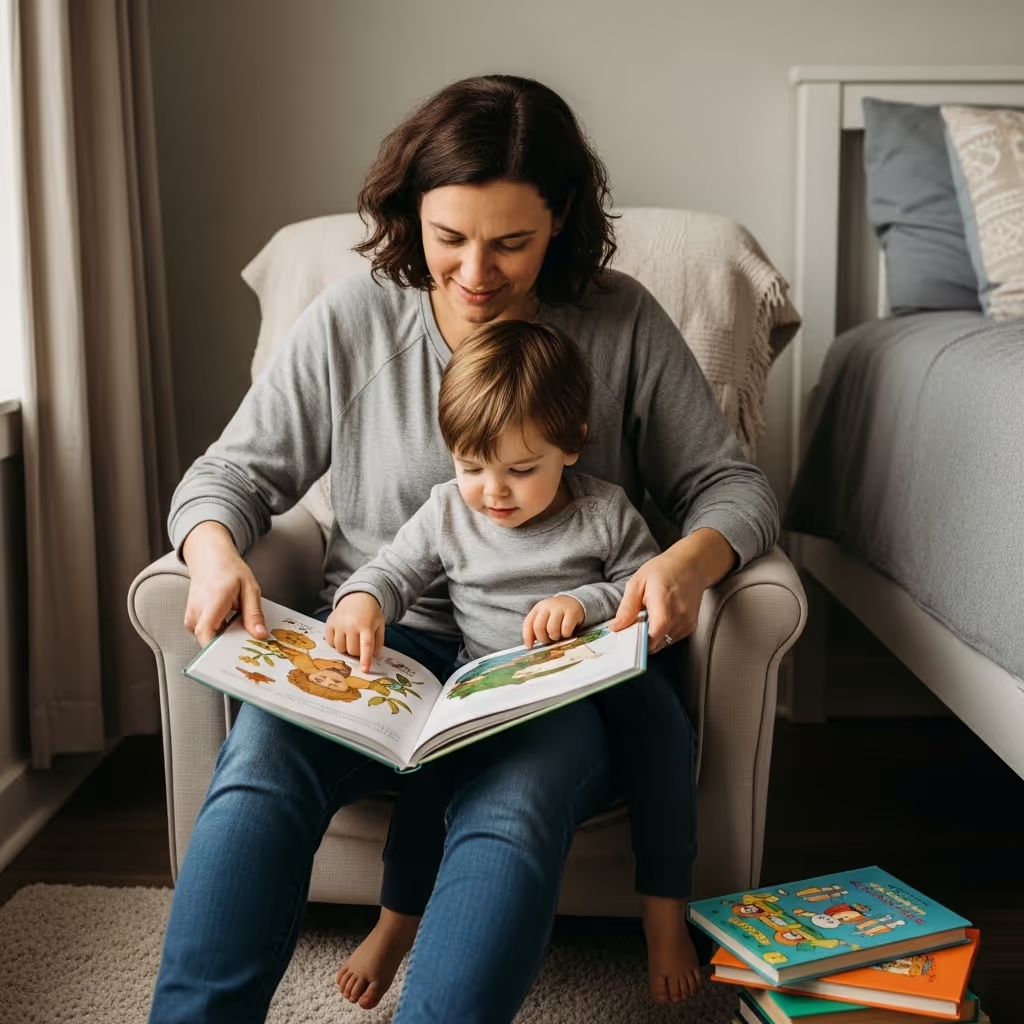
A story heard for the first time must be navigated. The child is tracking characters, following events, managing uncertainty, and building a picture of a world they have never visited. This is absorbing work, and it leaves very little attention available for anything else.
The second time is different. The destination is known. The dragon will be defeated. The journey will end. The uncertainty that consumed so much attention on the first reading has been resolved, which means the child is now free to notice everything they missed. The texture of the world. The smaller characters. The moment just before the funny part where something quietly prepares the ground for it.
When children ask to hear the same story again, they are not asking for the same experience. They are asking for the same material — so they can have a different experience inside it. The story has become a place they know well enough to explore rather than simply pass through.
What Familiarity Actually Does to a Story

There is a particular quality that a well-loved story develops after many readings that a new story cannot have. It becomes reliable. The child knows exactly where they are in it at any given moment, which creates a kind of safety that is not passivity — it is the safety of a known environment, which is precisely the condition in which imagination does its most confident work.
Educators who work with early readers frequently observe that children engage most creatively with stories they already know. They begin to anticipate. They begin to add. They correct a deliberate mistake with the quiet authority of someone who knows the text better than the reader. They are no longer receiving the story. They are, in a small but genuine way, co-authoring it.
This is one of the more remarkable things a repeated story does — it gradually transfers ownership. The story begins as something that belongs to the book. After enough readings it belongs, at least partly, to the child. They carry it with them. They apply it. They find, in new situations, that something from the familiar story has arrived ahead of them and made itself useful.
The Thing That Changes Every Time Even When Nothing Does

There is a detail about repeated readings that parents who read aloud discover without always naming it. The story stays the same. The child does not. And so each reading, even of identical words in identical order, is a slightly different encounter — because the reader bringing themselves to it has changed since the last time.
A joke that was simply funny at four becomes funnier at five because the child now understands something about timing they did not understand before. A moment that seemed straightforward at six becomes complicated at seven because the child has acquired, somewhere in the intervening months, enough experience to notice that it is not as simple as it appeared.
When children ask to hear the same story again, they are in some sense testing whether it still holds — whether the world they trusted on the last reading is still trustworthy now that they are slightly different. The best stories pass this test repeatedly. They are built with enough depth that each new version of the child finds something new in them, which is why certain books are returned to across an entire childhood rather than outgrown at the first sign of progress. Writing that kind of depth into a story is not a matter of adding more. It is a matter of leaving exactly the right amount unsaid.
A story that survives repeated reading has passed a test that most stories never face. It has been examined closely, at different ages, by a reader who knew exactly what was coming and chose to come anyway. That is not a small thing to ask of a book. It is, in fact, the most demanding thing a reader can ask — and the stories that rise to it tend to be the ones that were written with the understanding that a child is not a simple audience. They are a returning one. The best of those stories are still being discovered on the fourteenth reading by a child who thought, quite reasonably, that they already knew everything there was to find.
Readers who find this idea compelling may enjoy this post about why readers fall in love with fictional places that don't exist — which explores what happens when a story builds a world deep enough to return to long after the reading is done.