
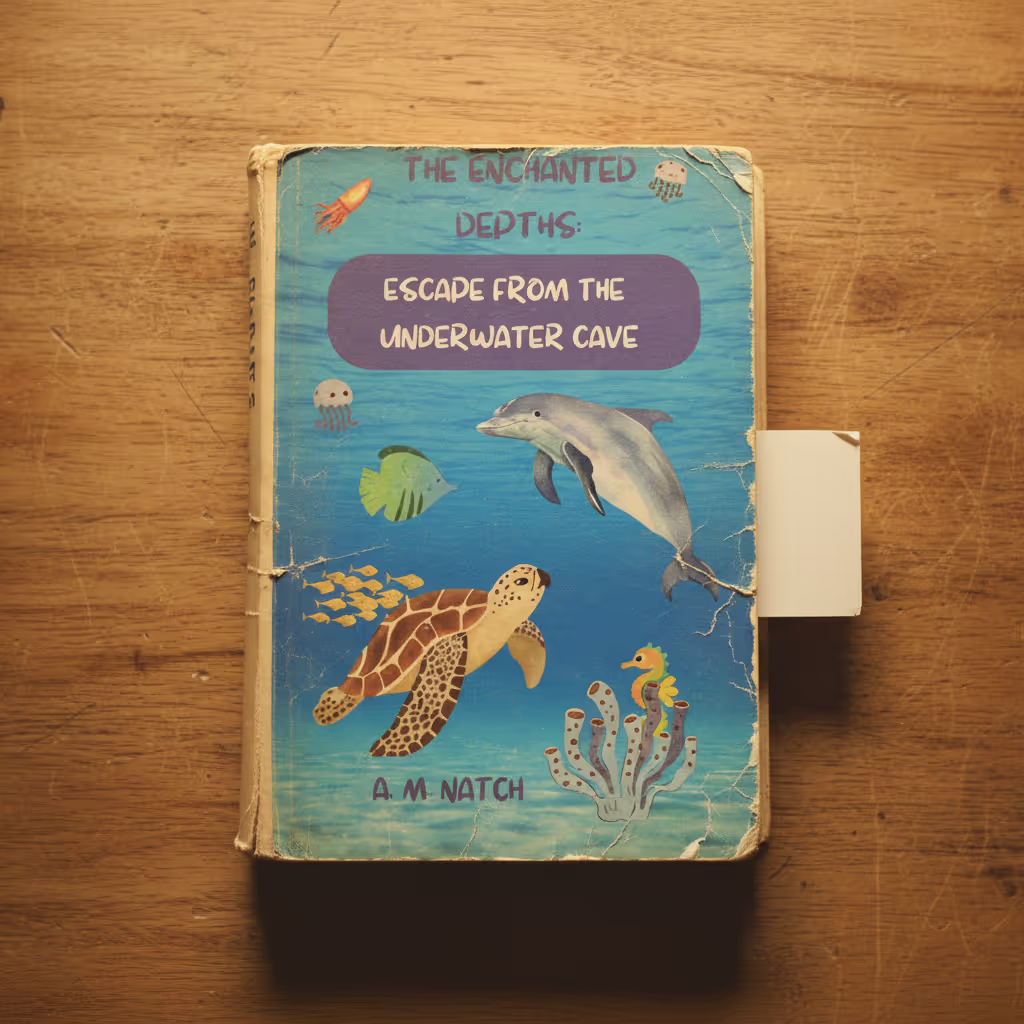
Pay attention to the book a child returns to when nobody has suggested it. Not the one assigned, not the one gifted with good intentions, not the one recommended by someone who thought it would be educational. The one they find themselves. The one that lives under the pillow or migrates quietly from the shelf to the bedside table without anyone quite noticing when the move occurred. A child's favorite book is not simply a preference. It is, if observed carefully and without comment, a small and remarkably precise portrait of the person currently in the process of becoming. The story they chose says something about what they are looking for — and what they are looking for, at eight or nine or ten, is rarely what the adults around them have thought to ask about.
Children do not choose favorite books randomly. They choose them with a seriousness of purpose that they could not articulate and do not need to. Something in the story answered something in them — a question they had not formed into words, a feeling they recognized without having named it, a version of the world that matched, more closely than most versions do, the one they carry privately inside. A child's favorite book is the story that got closest. And the story that got closest reveals, to anyone paying the right kind of attention, a great deal about what it was trying to reach.
The Story They Chose When No One Was Watching
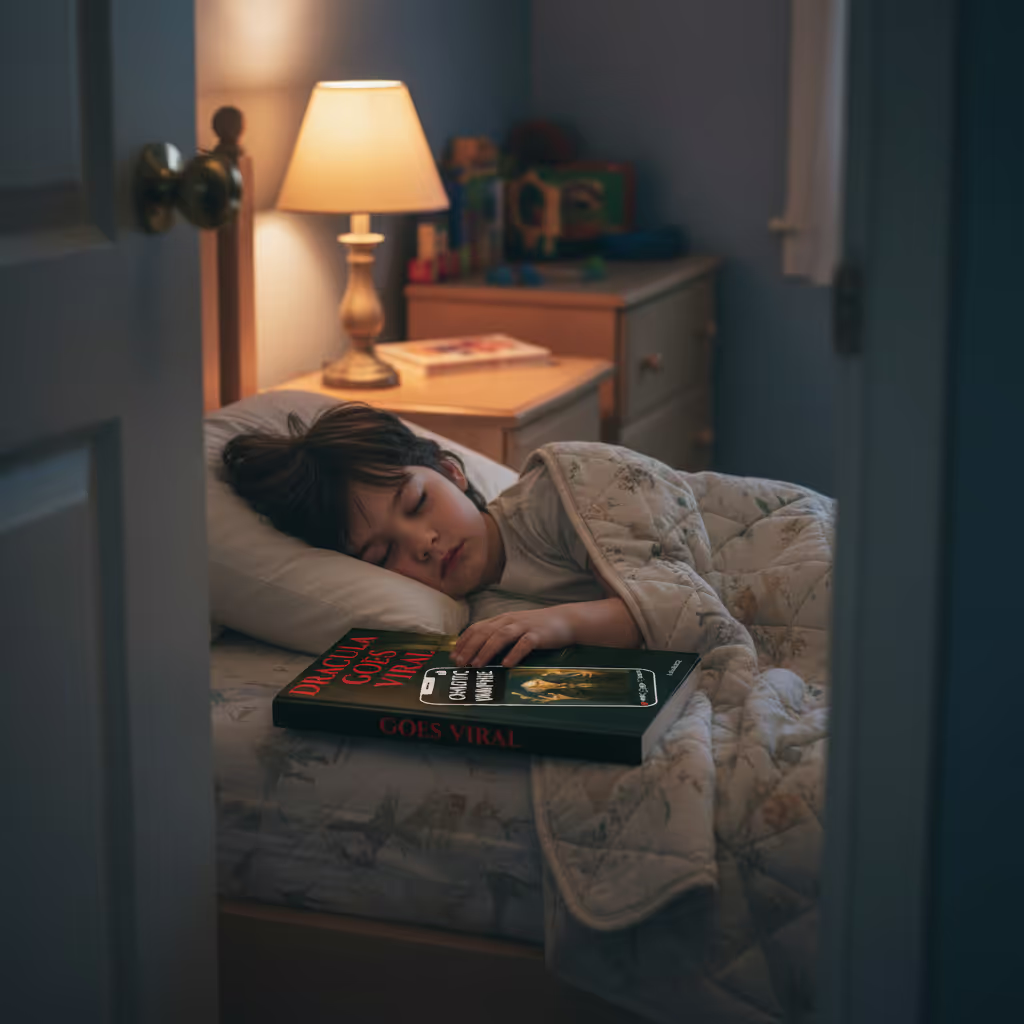
There is a difference between a book a child likes and a book a child loves. The liked book is pleasant. It is read once, perhaps twice, and returned to the shelf without ceremony. The loved book is different in kind rather than degree. It is read until the spine gives. It is defended with surprising conviction when someone suggests it might be time to try something new. It is, in the child's interior geography, not a book so much as a place — somewhere they return to for reasons they could not fully explain and have not been asked to.
The books children love without being told to love them tend to share a quality that is difficult to name precisely but immediately recognizable. They take the child seriously. Not in a solemn way — many of the most loved children's books are extremely funny — but in the sense that they do not condescend, do not simplify, and do not resolve everything too neatly. They leave the child with something to carry, which is precisely what the child was looking for when they picked the book up for the fourth time.
A child's favorite book is the story that trusted them. And children, given a story that trusts them, tend to trust it back for a very long time.
What the Choice Actually Reveals
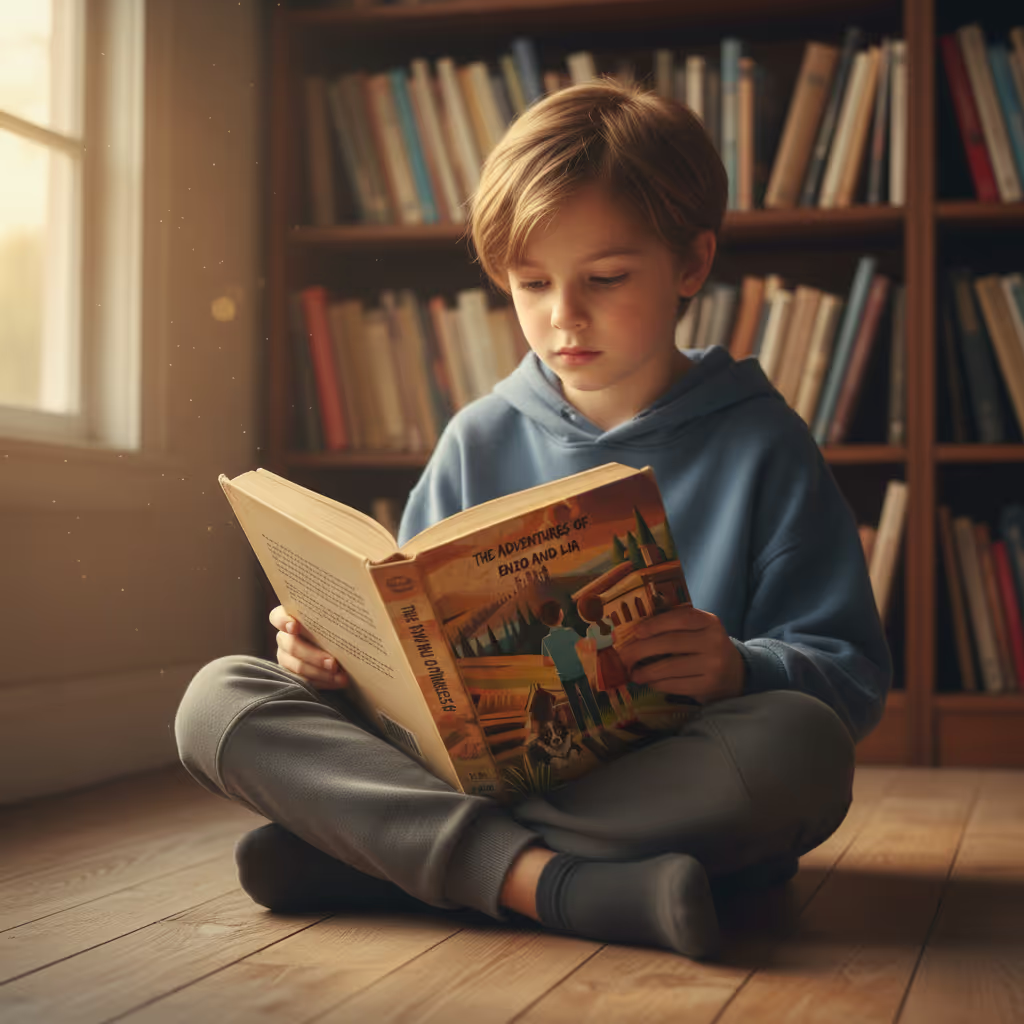
A child who returns obsessively to adventure stories is not simply a child who likes excitement. They are a child who needs to believe that difficulty can be navigated — that the situation, however impossible it appears at the beginning of chapter three, will yield to sufficient determination and the occasional stroke of unexpected luck. The adventure story is not entertainment. It is a rehearsal.
A child who prefers funny books — the ones where characters approach impossible situations with complete and misplaced confidence — is frequently a child who has noticed that the world is slightly absurd and finds this more reassuring than alarming. The humor is not escape. It is recognition. The story confirms something the child already suspected, which is that dignity and disaster are not mutually exclusive and that the second does not necessarily cancel the first.
A child who loves stories about places — fictional worlds rendered with enough detail to feel genuinely habitable — is a child building an interior life of considerable complexity. They are not retreating from the world. They are expanding it, quietly and without announcement, in directions that will eventually become visible in the kind of person they are turning into. Parents who pay attention to a child's favorite book are, without always knowing it, being given a map.
Why the Favorite Book Changes and What That Means
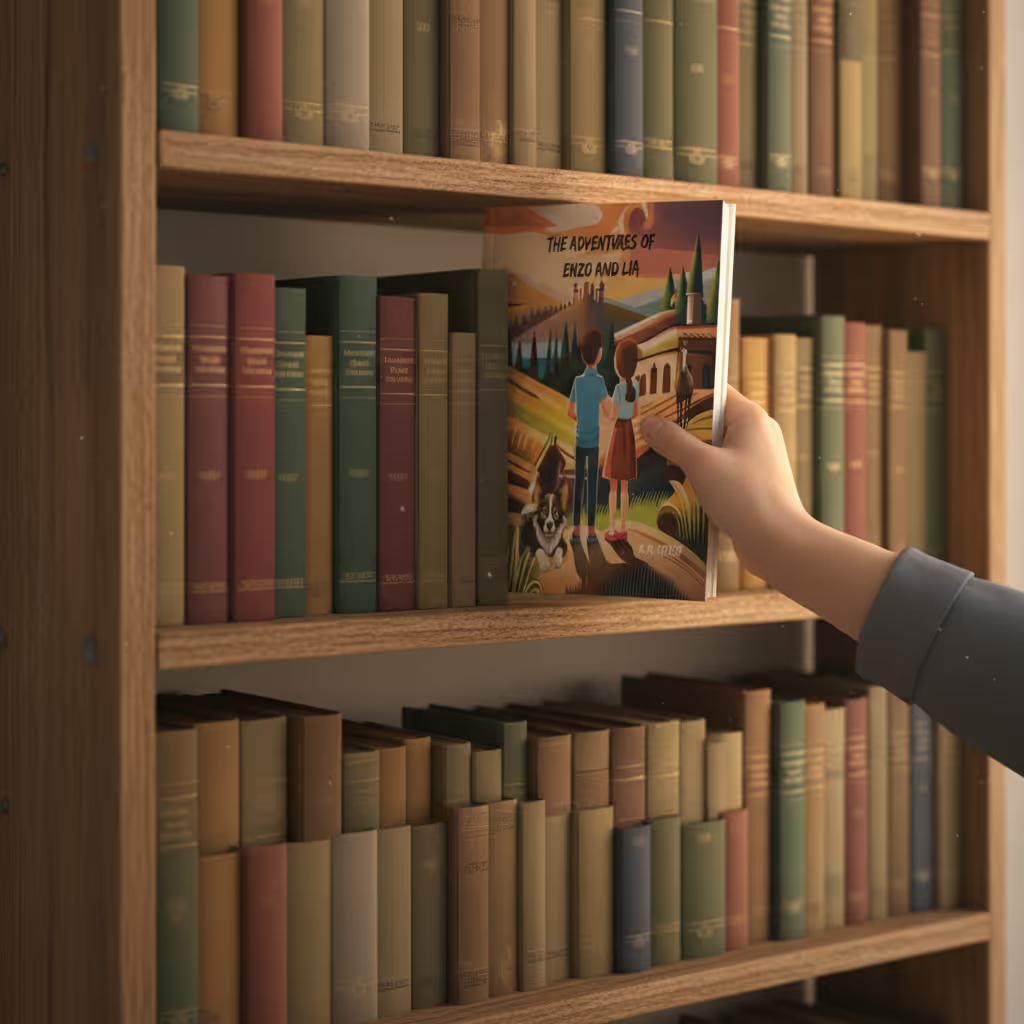
A child's favorite book does not stay the same forever. It changes as the child changes — sometimes gradually, sometimes abruptly, in a way that can feel, to an observant parent, almost like an announcement. The book that was everything at seven is quietly retired at nine, not because it was outgrown so much as because the child has moved to a different question and needs a different story to think about it with.
These transitions are worth noticing. The book a child abandons reveals almost as much as the one they adopt. A child who suddenly stops returning to a comfort read and reaches instead for something more complicated has not lost their love of stories. They have graduated to a harder question. The new favorite book is the story they found adequate to it.
Educators who work closely with young readers frequently observe that a child's reading choices shift meaningfully at moments of change — a new school, a new sibling, a friendship that ended or began. The child does not reach for a book because someone told them it would help. They reach for it because something in them already knew it contained what they needed. A child's favorite book, at any given moment, is the story that is currently doing the most important work in their life. It is rarely the book anyone would have predicted. It is almost always exactly right.
The book under the pillow is not an accident. Neither is the one with the broken spine, or the one that has been read so many times the child can quote it without opening it. These are the stories that were there when the child needed something — something they could not name and did not ask for out loud, but found anyway, between two covers, on an unremarkable afternoon. A child's favorite book is one of the quietest and most reliable clues to who that child is in the process of becoming. The stories worth giving a child are the ones that might become that book — the ones that take them seriously, trust them completely, and leave them with something worth carrying. Those books exist. Some of them are still waiting to be found.
Readers who find this idea compelling may enjoy this post about why children ask to hear the same story again and again — which explores what happens when a story becomes so trusted that a child returns to it not for the ending but for the experience of being inside it again.