
There is a moment in the writing of any story where something arrives that was not in the plan. Not a small adjustment — a fundamental shift, the kind that changes the entire direction of a book and makes every decision that came before it suddenly make sense in a way it didn't quite before. For this particular Dracula children's book, that moment arrived with a child. Not a frightened child running from the Count, which would have been the obvious choice and, in retrospect, entirely the wrong one. A child who was not frightened at all. A child who found the Count's centuries of brooding dignity considerably less impressive than he did, and who had questions — specific, relentless, cheerfully unanswerable questions — about practically everything. The moment that child walked into the story, Dracula stopped being a figure of gothic drama and became, for the first time, genuinely funny.
Writing a Dracula children's book requires a particular kind of decision early on — not about plot or setting, but about perspective. Whose eyes is this story seen through? A child who fears Dracula produces one kind of story. A child who does not produces something entirely different. The second option is considerably more interesting and considerably more difficult, because it requires Dracula to be seen clearly rather than dramatically — which is, for a vampire who has spent several centuries carefully managing his reputation, a considerably more unsettling experience than anything a torch-wielding mob ever managed.
Why the Obvious Choice Was the Wrong One
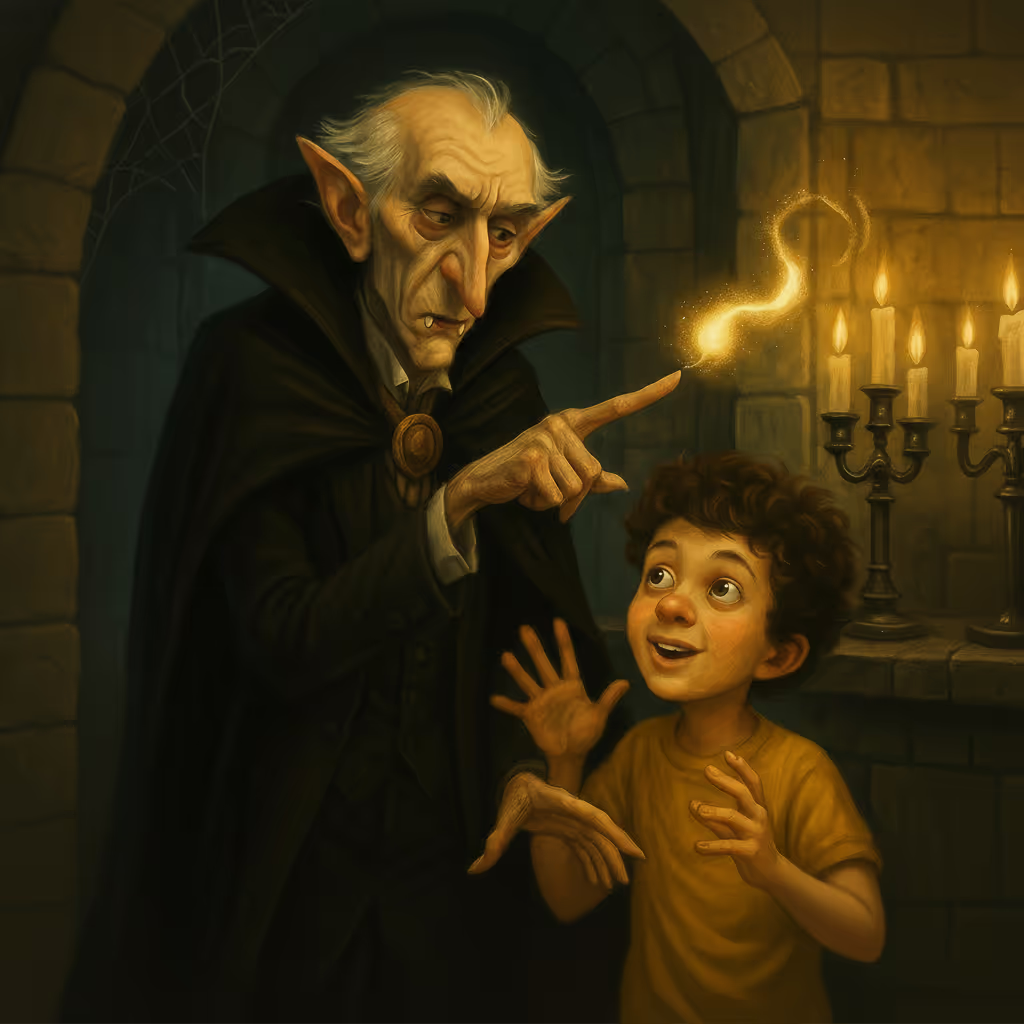
The instinct, when writing a story about Dracula for young readers, is to position the child as the one who must be protected, warned, or rescued. The vampire is the danger. The child is the innocent. The story proceeds accordingly — with appropriate tension, appropriate resolution, and the comfortable familiarity of a structure every reader already knows.
This structure works. It has worked for a very long time, across a very large number of stories, for entirely legitimate reasons. It was also, for this particular book, completely uninteresting.
A Dracula who is feared is a Dracula who remains in control of his own narrative. He is dramatic. He is imposing. He is exactly what everyone expects him to be, which means the story never has to do the one thing that makes comedy possible — put him somewhere he cannot manage. The decision to give him an eight-year-old best friend was the decision to put Count Dracula somewhere he absolutely could not manage, and to keep him there for the entire length of a book.
What an Eight-Year-Old Does to a Vampire's Dignity

An eight-year-old has no particular investment in a vampire's reputation. They have not read the gothic literature. They have not absorbed the cultural weight of centuries of dramatic portrayal. They see a tall man in a cape who takes everything extremely seriously and immediately identify this as an opportunity to ask approximately forty-seven questions, none of which have satisfying answers.
Why does he sleep in a coffin when a bed would be more practical? Has he considered that the cape makes him look like he is trying too hard? What does he actually eat at the Vampire Festival, given the circumstances? These are not questions a torch-wielding mob would ask. They are questions that cannot be deflected with a dramatic speech or a sweeping gesture, because an eight-year-old will simply wait for the deflection to finish and then ask the question again.
This is what the child character does to the story that no other character could do — he makes the Count answer for himself. Not to a hunter, not to a rival, not to a god, but to a person who has absolutely no reason to be impressed and is, in consequence, not impressed at all. Writing those scenes was, in practice, one of the more enjoyable parts of the entire book. The Count's dignity, tested by someone too young to understand why it mattered, turned out to be the funniest thing in the story.
What the Story Became Because of Him
A Dracula children's book built around genuine friendship rather than fear required the Count to do something his literary history had not previously required of him — change. Not dramatically, not completely, and certainly not willingly. But incrementally, in small ways he would strenuously deny, in the presence of a child who noticed every single one and said nothing about them because he understood, in the way that children often understand things that adults make complicated, that some changes are better received in silence.
The story that emerged from that decision is warmer than it was intended to be. It is funnier than it was planned to be. And it is, in the end, about something that was not in the original outline at all — the particular, improbable friendship between a figure of ancient dignity and a child with no patience for it, and what each of them, quietly and without acknowledgment, gives the other. That is not a story about a vampire. It is a story about being seen by someone who had no reason to look, and finding, against all expectation, that it is not entirely unwelcome. The Count would not phrase it that way. But he has not denied it either, which is, for Dracula, essentially a confession.
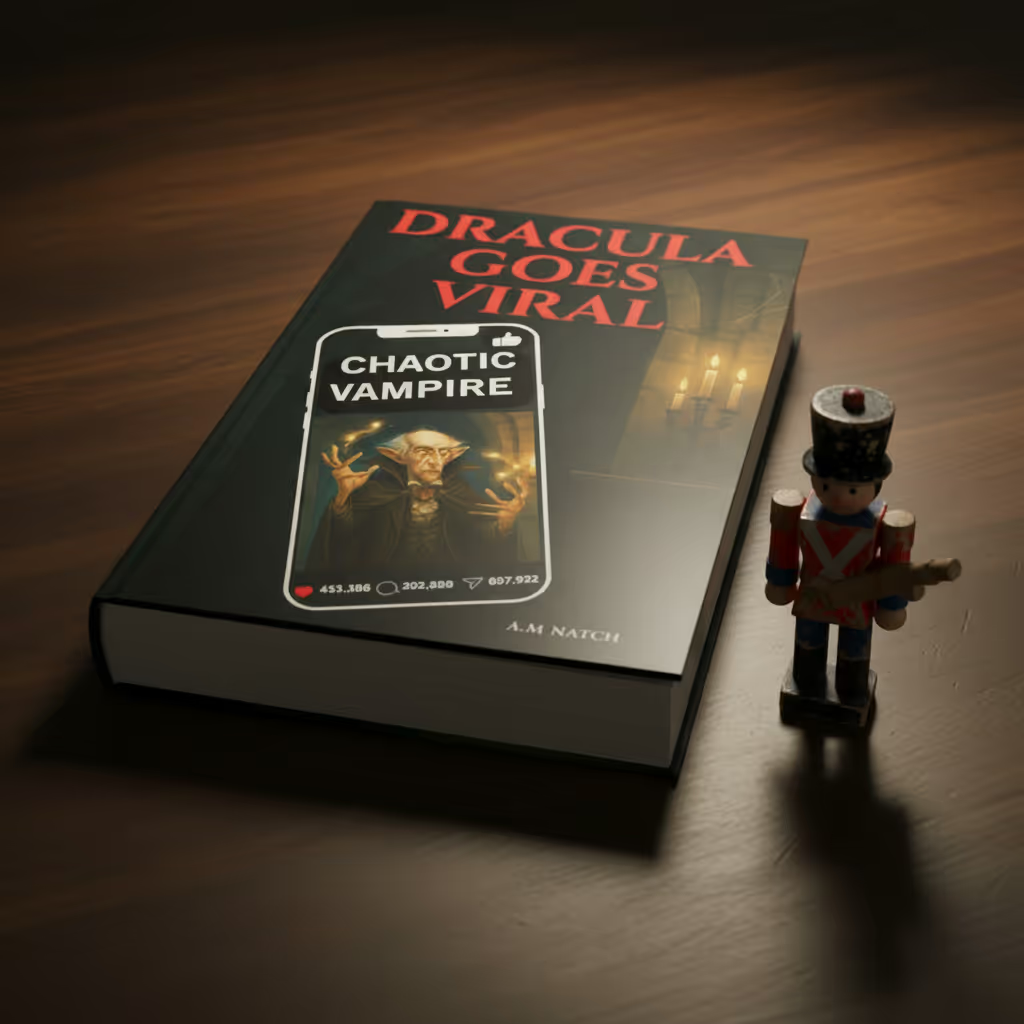
The best creative decisions rarely announce themselves as decisions. They arrive as small, almost accidental choices that turn out, in retrospect, to have been the whole point. Giving Dracula an eight-year-old best friend was that kind of choice — quiet, slightly counterintuitive, and entirely responsible for making the book what it became. A Dracula children's book that is really about dignity meeting curiosity, and what happens when neither one is willing to entirely give way. If you have ever wanted to see one of the most dramatically serious figures in literary history completely outmaneuvered by a child who simply refused to be appropriately impressed — he is waiting in the pages of Dracula Goes Viral, and he has not run out of questions.
Readers curious about the world this friendship inhabits may enjoy this post about A Tourist's Guide to Valcronis — where the town that surrounds this unlikely friendship greets new visitors with considerable civic enthusiasm and absolutely no awareness of how unusual it has become.