

There is a town that has never appeared on any map, and yet a considerable number of people know exactly where it is. They know which street the bakery is on. They know what the mayor is like. They have strong opinions about the weather there in autumn, despite the fact that the weather there in autumn has never, technically, occurred. This is not a condition that requires treatment. It is, in fact, one of the more reliable signs that a story has done its job correctly. Falling in love with fictional places is not a side effect of reading. It is the point of it. The place becomes real not because someone built it, but because enough people believed in it at exactly the right moment.
A fictional place that works does not feel constructed. It feels discovered. The reader does not have the sensation of being shown a world — they have the sensation of having found one, quietly, between two pages, while something else entirely was supposed to be happening. This is not an accident of imagination. It is the result of very specific things a story does, usually without announcing them, that make a place feel permanent rather than temporary.
The Difference Between a Setting and a Place Worth Missing

Most stories have settings. Very few have places. The distinction is not obvious while reading, but it becomes clear the moment the book closes. A setting is where events occur. A place is somewhere the reader wishes they could return to — and feels, with some surprise, that they cannot.
Falling in love with fictional places happens when a story treats its world as though it existed before the story began and will continue after it ends. The characters do not explain their surroundings. They simply inhabit them. The reader understands, without being told, that the market was there last Tuesday and will be there next week, regardless of whether anyone is watching.
Children respond to this quality with particular immediacy. Parents who read aloud frequently notice the moment it happens — the child stops asking what comes next and starts asking what else is there. The story has become a place, and the place has become somewhere worth knowing.
What Makes an Imaginary World Feel Permanent
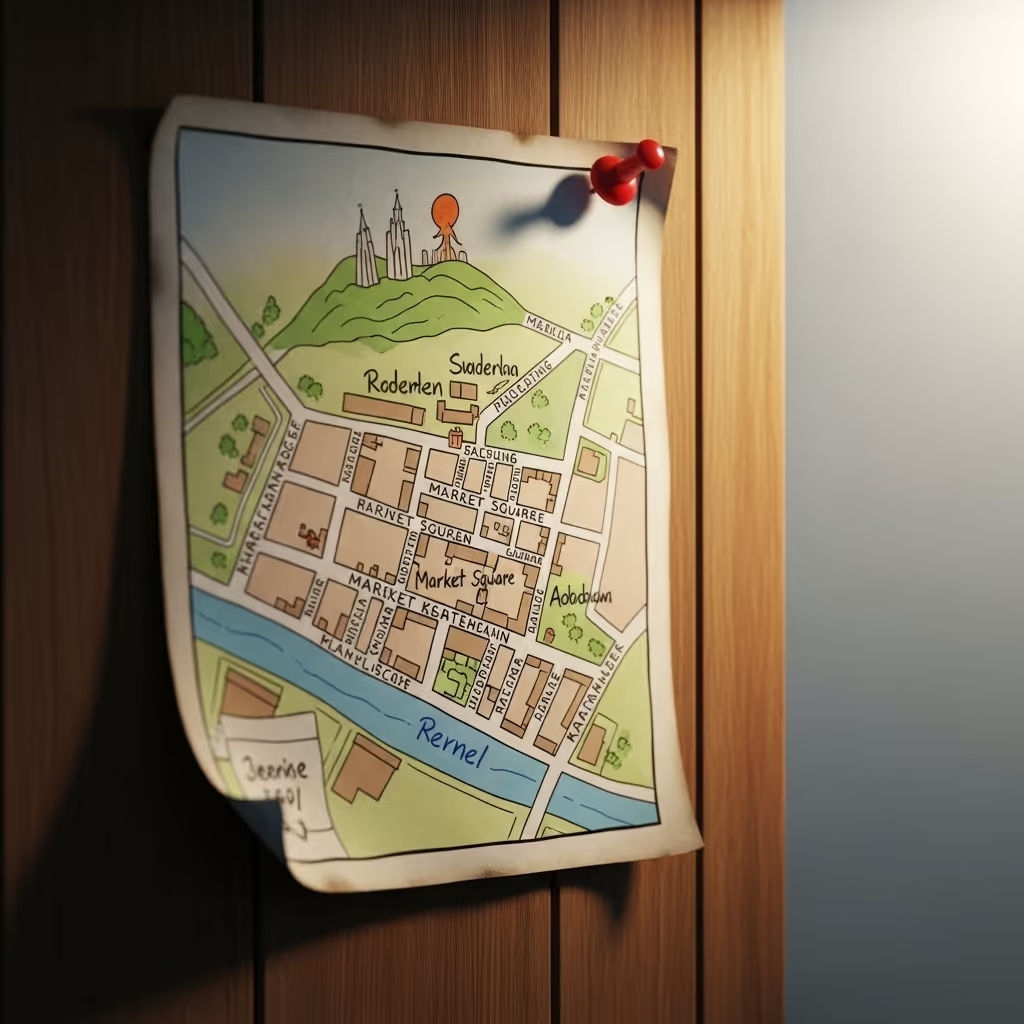
The fictional places readers fall in love with share a quality that is difficult to name but immediately recognizable. They have edges that extend beyond the story's reach. There are streets the characters never walk down, rooms they never enter, conversations they never overhear. The world is larger than the narrative, and the reader can feel that largeness without needing to see it directly.
This is not achieved through description. Long, detailed descriptions of fictional places rarely produce the effect. What produces it is specificity in unexpected places — a minor character with a particular habit, a building mentioned once and never again, a local custom that exists without explanation. These details do not build the world so much as they suggest that the world was already built before anyone arrived to write about it.
Writing a place that feels permanent requires a particular kind of authorial restraint. There is a strong temptation to explain everything, to make the world legible and complete. The places readers fall in love with are rarely complete. They are full of the right kind of gaps — gaps that invite imagination rather than expose absence.
The Places That Stay After Everything Else Fades

There is a specific kind of memory that belongs only to fictional places. It does not work like ordinary memory. It does not fade in the usual way. A reader who encountered a beloved imaginary world at the age of eight will find, at thirty-eight, that the place is still there — not vaguely, but specifically. The smell of a particular room. The sound a door made. The quality of light through a window that was never real.
Falling in love with fictional places leaves this kind of residue because the imagination, when properly invited, does not merely receive a world — it completes one. The reader fills the gaps with something personal, something that belongs to them alone. The world becomes partly theirs in the making of it, which is why it stays.
Educators have long noticed that children who form strong attachments to fictional places tend to become readers for life. The place is the reason they return — not always the plot, not always the characters, but the particular feeling of arriving somewhere that is, against all reasonable evidence, genuinely familiar. Some of those places, it turns out, are waiting in books that have not yet been opened.
Every reader carries a small collection of places that do not exist. They are kept with surprising care — more carefully, sometimes, than places that do. They are returned to in odd moments, consulted quietly, and occasionally mourned when the memory of them begins to soften at the edges. This is not sentimentality. It is evidence that a story did something genuinely difficult: it built a place worth loving, out of nothing more than the right words in the right order, and trusted a reader to make it real. The best fictional worlds have always understood that the reader is not a visitor. They are, from the first page, a resident.
Readers who find themselves drawn to fictional worlds may enjoy this post about Why funny characters in stories are the ones readers never forget — which explores another way stories create the kind of lasting attachment that brings readers back.