
The story begins exactly as expected. The setting is recognizable. The characters arrive in the correct order. The first few pages proceed with the comfortable familiarity of something that has been told many times before and knows it. And then — something is slightly different. Not wrong, exactly. Just different. A detail that was not there before. A character who responds in a way the original never anticipated. A moment where the story, having established that it knows exactly what it is doing, quietly does something else entirely. A familiar story becomes something different not with a dramatic announcement but with a single small shift that changes everything that follows — and the reader, turning the page, realizes they are no longer quite sure where this is going, which is precisely the most interesting place a story can put them.
The retold story is one of the oldest forms in literature. Every generation takes the stories it inherited and does something new with them — not because the originals were insufficient, but because the same story, seen from a different angle or set in a different light, turns out to contain things the original telling never reached. A familiar story becomes something different when a writer finds that angle, commits to it completely, and trusts the reader to follow. The story does not need to be unrecognizable. It needs only to be seen differently — which is, in the end, the whole point of telling it again.
The Detail That Changes Everything
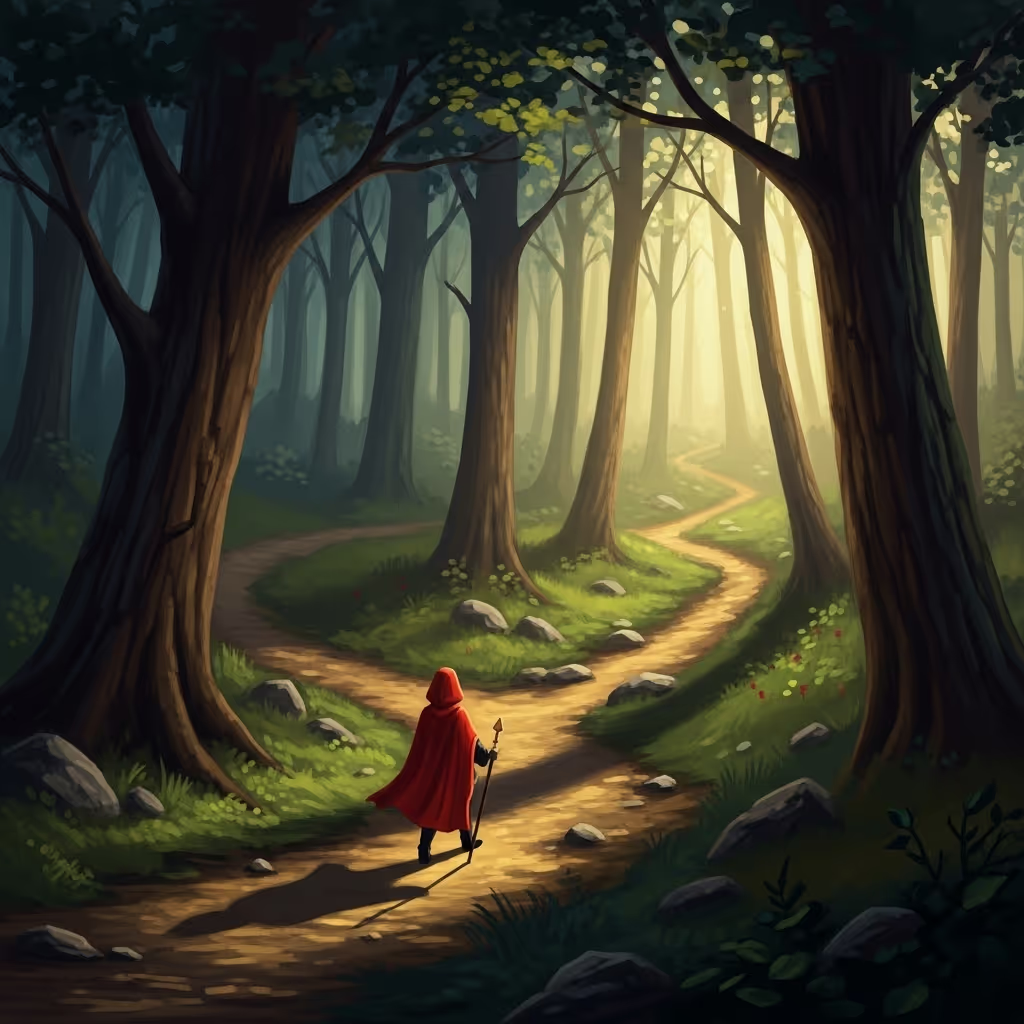
A retold story does not need to change everything to become something new. It needs to change one thing — the right thing — and follow that change with complete consistency to wherever it leads. A villain given a comprehensible motive. A hero allowed to be wrong. A minor character moved from the background to the foreground, where they turn out to have been the most interesting person in the story all along.
This single change creates a ripple that runs through everything it touches. If the villain has a comprehensible motive, the hero's victory becomes complicated. If the hero is allowed to be wrong, the ending cannot be entirely triumphant. If the minor character steps forward, the major characters must recede — and what they look like from a slight distance is frequently not what they looked like from the center.
A familiar story becomes something different at the moment this ripple reaches the parts of the story the original never questioned. The assumptions the first telling made without noticing — about who matters, whose perspective is correct, what the ending means — these become visible the moment something they depended on is gently removed. The story does not collapse. It reveals itself more completely than it did before.
What the Reader Brings to a Story They Already Know
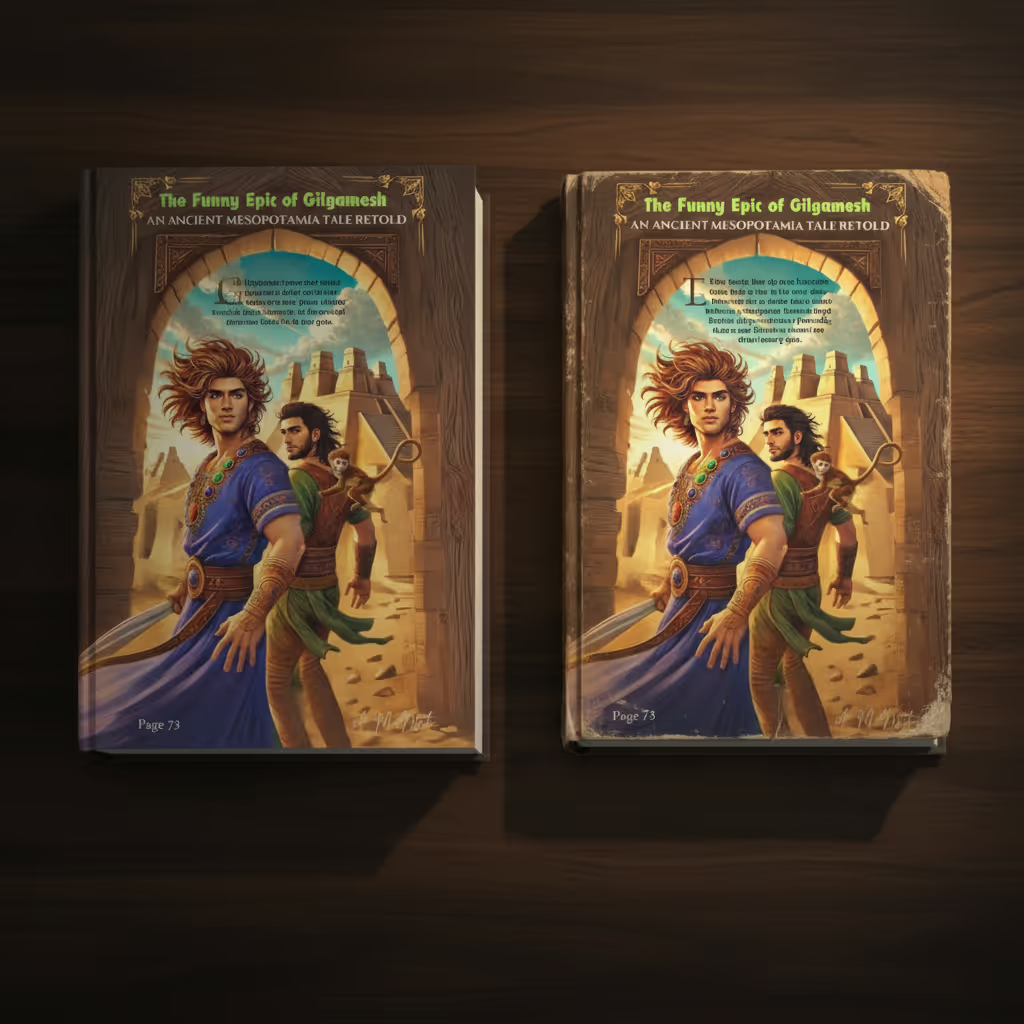
A reader encountering a retold story arrives with something that a reader encountering an original story does not have — a complete version of events already in their possession. They know what happened. They know who won. They know, or think they know, what it all meant.
This foreknowledge is not an obstacle to the retelling. It is its greatest asset. The reader who knows the original will notice every deviation from it — every moment where the familiar story takes an unexpected turn — with a sharpness that a first-time reader cannot match. The retelling is, for this reader, two stories simultaneously: the one they already know and the one they are currently reading, and the tension between those two versions is where the most interesting experience lives.
When a familiar story becomes something different, the reader's existing knowledge becomes a kind of dramatic irony. They see what is coming. They know what the original did here. And when the retelling does something else — something the original never imagined, in precisely the moment where the original was most certain — the effect is disproportionate to the size of the change. The smallest deviation from a well-known path feels enormous precisely because the path was so well established.
Why the Best Retellings Are Acts of Respect

There is a version of the retold story that treats the original as a problem to be corrected — as though the classic tale was simply wrong, and the retelling exists to set the record straight. This version is rarely interesting. It replaces one certainty with another, which produces the same flatness in a different direction.
The retellings that work are the ones that approach the original with genuine curiosity rather than judgment. They are not trying to prove the first version wrong. They are trying to find out what else was true — what the original, in its particular telling, did not have time or inclination to reach. A familiar story becomes something different not because it was inadequate but because every story, however complete it appears, contains more than one telling.
This is why certain classic stories are retold generation after generation without being exhausted. They are not being corrected. They are being continued — explored from angles the original did not occupy, asked questions the original did not think to pose. The story that can sustain that exploration is the story that was always larger than any single version of it. The best of them have been waiting, with considerable patience, for someone to finally ask the right question.
A story told again is not a story repeated. It is a story reconsidered — turned slightly in the light, examined from a position the original never occupied, asked what it looks like from here. The familiar story that becomes something different does not leave the original behind. It carries it forward, into territory the first telling never reached, and finds there something that was always present but never previously visible. These are the stories worth telling again. Not because the first version failed, but because the story was always larger than one telling could contain — and somewhere in that extra space, something genuinely new has been waiting to be found.
Readers who enjoy familiar stories seen from unexpected angles may enjoy this post about the servant who knew everything — untold perspectives in classic stories — which explores what the most overlooked figures in classic tales were observing all along.