
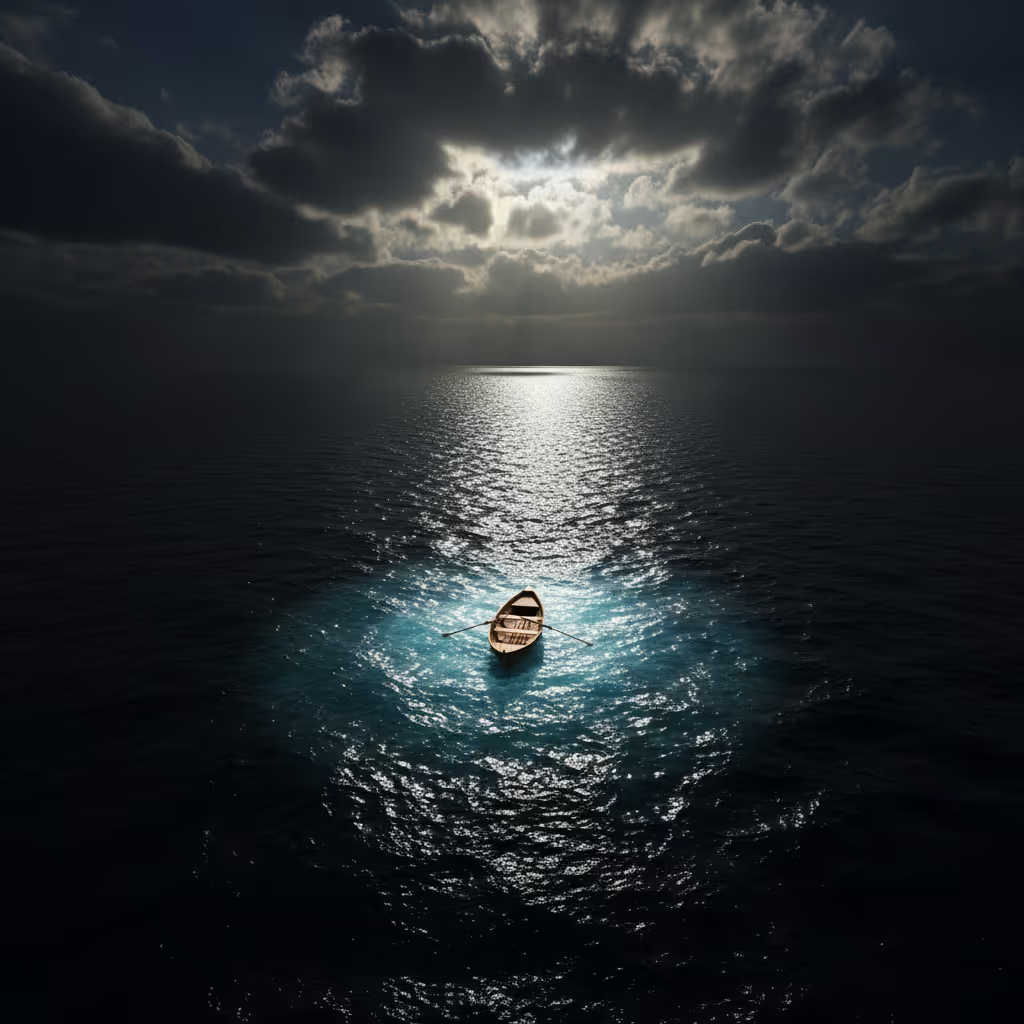
Somewhere in Mesopotamia, a man built a boat. Somewhere in ancient India, a man built a boat. Somewhere in Greece, in Mesoamerica, in West Africa, in the Pacific Islands, and in dozens of places that had no knowledge of each other's existence, someone built a boat, loaded it carefully, and waited for the water to recede. The details differ. The boats are different sizes. The gods have different names and different reasons for their displeasure. The animals brought aboard vary according to what was locally available and considered worth saving. But the shape of the story — the flood, the survivor, the aftermath, the beginning again — remains, across thousands of miles and thousands of years, remarkably consistent. Flood myths in ancient cultures are not a curiosity. They are one of the most persistent patterns in the entire history of human storytelling, and they have never been entirely explained.
The question of why flood myths appear in so many ancient cultures independently has occupied historians, archaeologists, and storytellers for generations. The answers are several, and none of them fully cancels the others out. There may be geological memory in some of them — real floods, catastrophic enough to pass into story. There may be something deeper — a human instinct to imagine the world ending and beginning again, which is a thought that tends to arrive regardless of geography. What is certain is that flood myths in ancient cultures are not borrowed. They are invented, repeatedly, by people who had every reason to tell a different story and chose, without coordination, to tell approximately the same one.
The Same Story, Told by Strangers
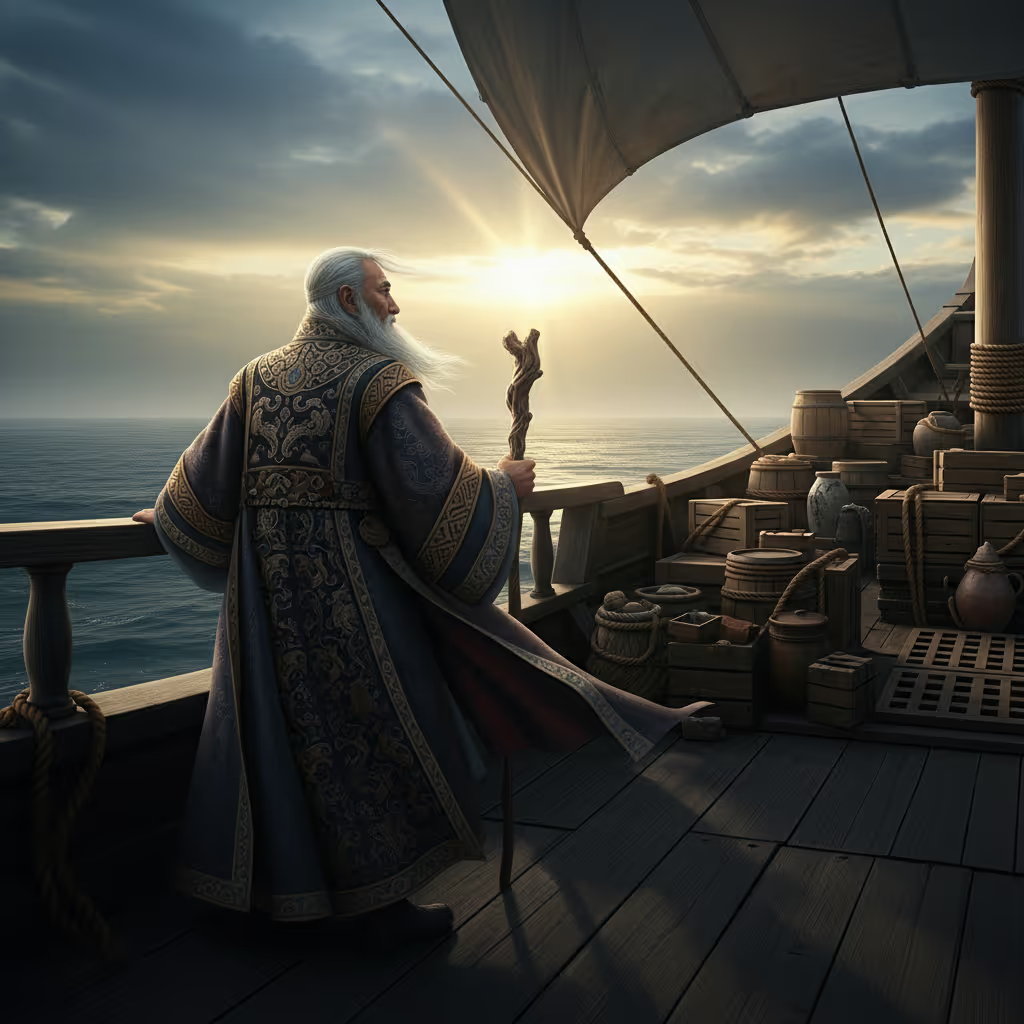
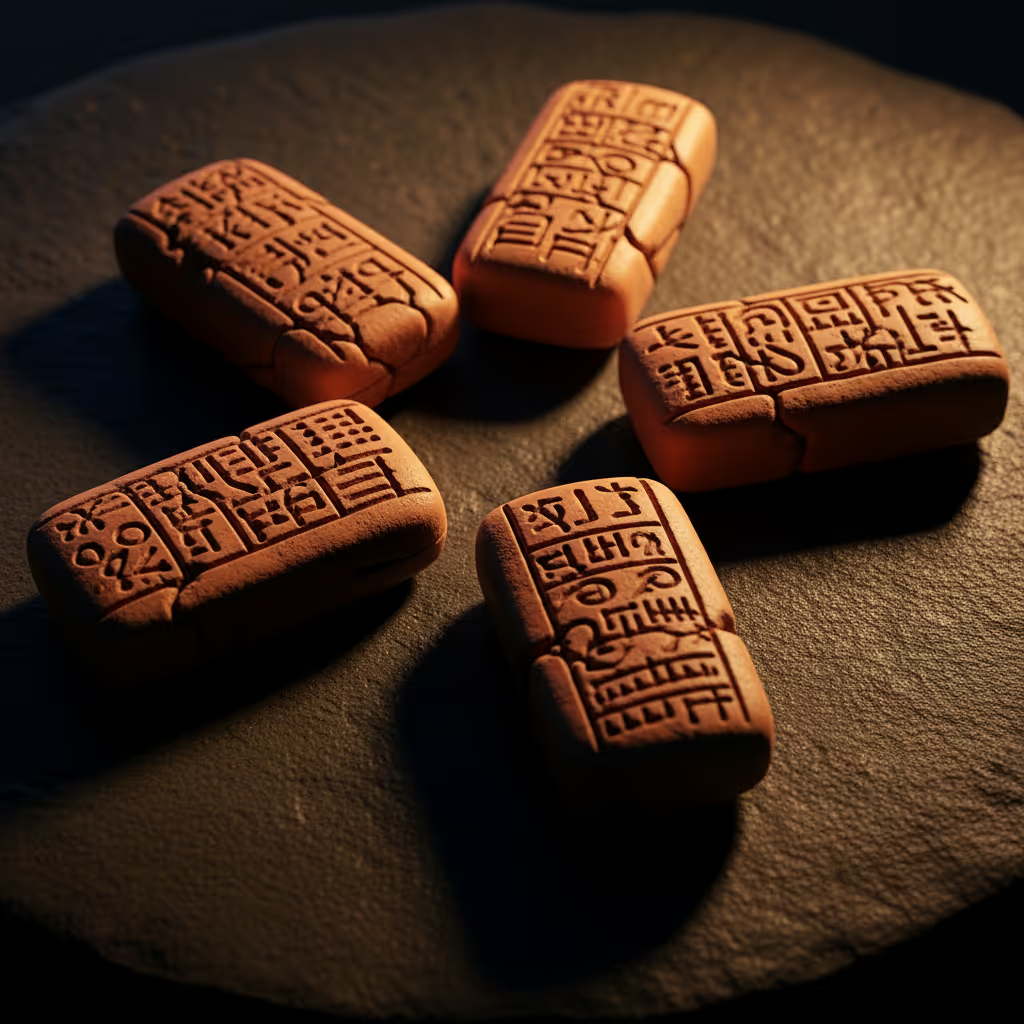
The Mesopotamian flood story is among the oldest written narratives in existence. It appears in the Epic of Gilgamesh, where a man named Utnapishtim receives warning of the coming waters and builds a vessel to survive them. The similarities to the later Biblical account of Noah are close enough to have produced considerable discussion across several centuries.
But neither Mesopotamia nor the ancient Near East holds a monopoly on the story. The Matsya legend of ancient India describes a great fish warning a man named Manu of an approaching flood and guiding his boat to safety. The Greek myth of Deucalion — son of Prometheus, survivor of a divine flood — follows the same essential shape. The Aztec story of Nata and Nena. The Ohlone people of California. The Yoruba of West Africa. The Aboriginal Australians.
Flood myths in ancient cultures appear on every inhabited continent. They were not transmitted from a single source. They were told by people who had never encountered each other, in languages that shared no common root, in civilizations separated by oceans and millennia. The story arrived independently, which means something about the story itself — or about the people telling it — made it almost inevitable.
What Water Means When It Means Everything
There is a reason flood myths in ancient cultures carry such consistent emotional weight. Water, for ancient civilizations, was not a backdrop. It was the condition of existence. Rivers determined where cities could be built. Floods determined whether harvests survived. Drought determined whether populations did. The relationship between human communities and water was not metaphorical — it was immediate, practical, and frequently catastrophic.
A story about a great flood is, at one level, simply a story about what water can do when it decides to do it. Ancient peoples who lived beside rivers that flooded seasonally — the Tigris, the Euphrates, the Nile, the Indus — had direct experience of water as both sustainer and destroyer. It is not surprising that their stories reflected this duality.
But the flood myth goes further than weather. It imagines not just a flood but a reset — the world washed clean, the survivor chosen, the beginning made possible again. This is not simply a record of disaster. It is a story about continuation — about the particular kind of hope that involves starting over with whatever could be saved. That story, it turns out, is one that human beings across every culture have found worth telling, which suggests it addresses something that geography and language do not change.
Why Children Take to These Stories Immediately

There is something in the structure of the flood myth that children respond to with particular directness. The elements are immediately legible — a warning, a preparation, a survival, a new beginning. The stakes are clear. The task is concrete. Someone must decide what is worth saving, which is a question children find genuinely interesting and will answer with considerable specificity if given the opportunity.
Educators who work with mythology frequently observe that flood stories cross cultural boundaries in the classroom more smoothly than almost any other ancient narrative. A child who has never heard of Gilgamesh will recognize the shape of Utnapishtim's story immediately — not because they know it, but because the story is built from materials that feel universal. The great danger. The small survival. The world made new.
Writing flood myths in ancient cultures into stories for young readers requires very little adaptation. The drama is already present. The questions the myth raises — what would you save, what would you leave behind, what does it mean to begin again — are questions children ask naturally, without prompting, and follow with remarkable seriousness. Some of the oldest stories ever told turn out to be, with very little adjustment, exactly the right length and exactly the right shape for a child who has just learned to ask why.
A story told independently by people who never met, in languages that share no common root, across thousands of years and every inhabited continent, is not an accident of transmission. It is evidence of something the stories themselves have always known — that certain questions belong to everyone, and certain shapes of narrative are the ones human beings reach for when the questions become large enough. Flood myths in ancient cultures survived not because they were written down carefully, which many of them were not, but because they were too necessary to lose. They are still being told. They are still being discovered. And somewhere, a child is hearing one for the first time and asking, with complete seriousness, what they would have put in the boat.
Readers who find ancient storytelling compelling may enjoy this post about why Mesopotamia is the most underused setting in children's fiction — which explores the world where some of the oldest flood myths were first written down.