
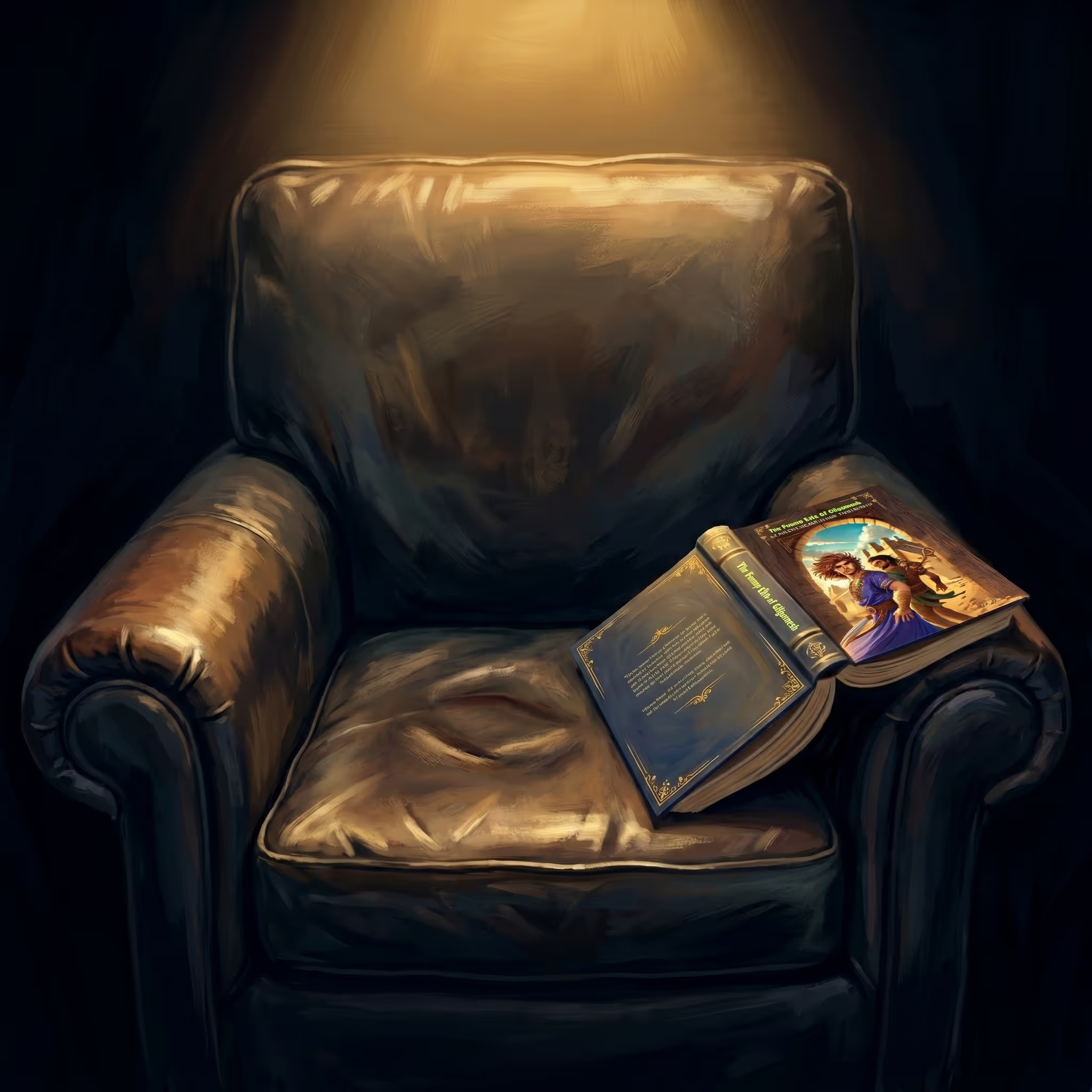
A hero can save the world and be forgotten by Tuesday. A funny character — one who trips at the wrong moment, argues with entirely the wrong person, or delivers exactly the wrong speech at exactly the right time — tends to linger considerably longer. This is not a complaint about heroes. Heroes are necessary, and most of them are doing their very best under difficult circumstances. But funny characters in stories occupy a different kind of space. They do not demand admiration. They simply arrive, say something that should not be said, and somehow become the person the reader thinks about on the walk home. It is a peculiar kind of power, and it operates almost entirely without the character's knowledge or intention.
Humor in storytelling is rarely taken as seriously as it deserves. It is often treated as decoration — something pleasant added after the important work is done. But funny characters in stories are not decorative. They are structural. They carry weight, reveal truth, and create the kind of emotional memory that more solemn characters frequently cannot. The reader who laughs is a reader who is paying very close attention indeed.
The Unexpected Power of a Well-Timed Stumble
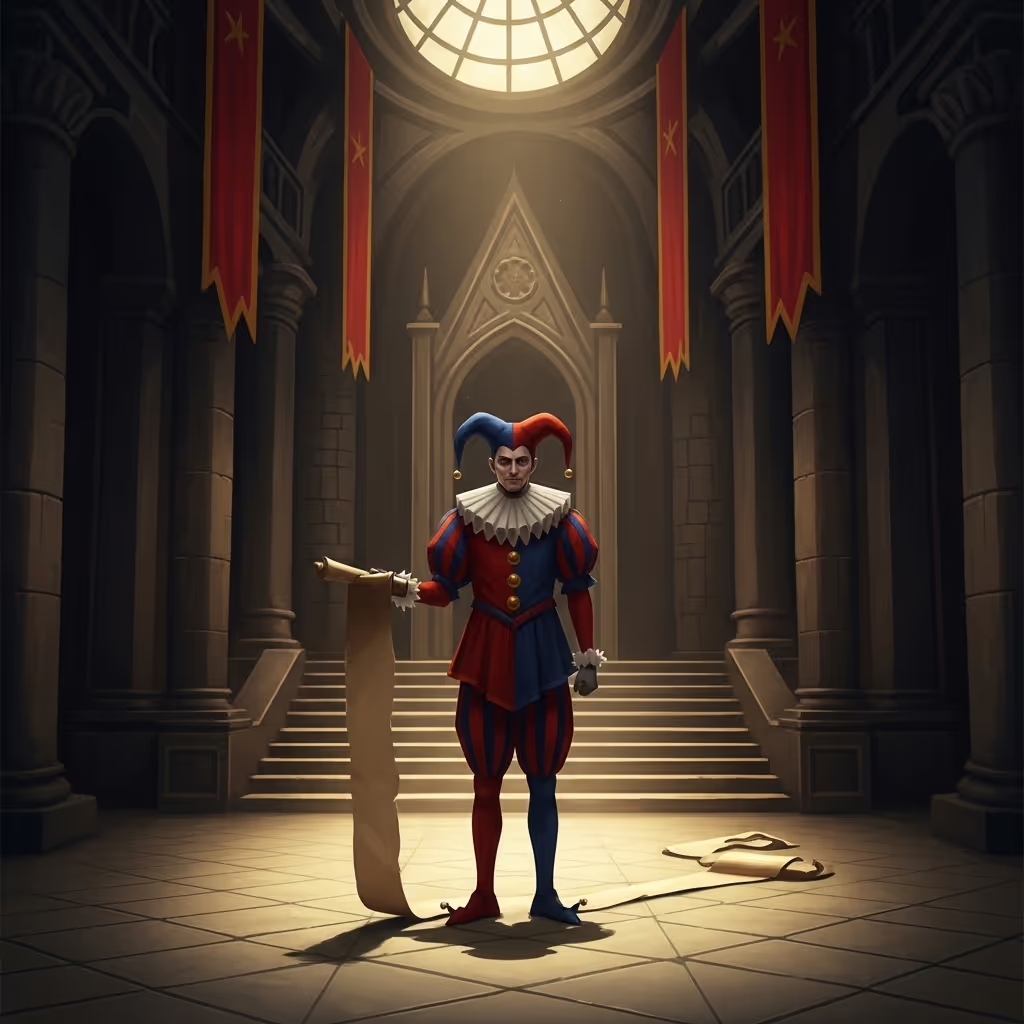
Educators who work with young readers have long observed something that experienced storytellers already know: children remember what made them laugh. Not always the plot. Not always the lesson. But the moment a character did something gloriously, spectacularly wrong — that stays. It takes up residence in the imagination and refuses to leave quietly.
This is not simply about entertainment. Humor creates a specific kind of attention. When a reader laughs, something relaxes. The story becomes less like a task and more like a conversation. And in that open, unguarded moment, everything else the story is trying to do — the ideas, the emotions, the questions worth asking — slips in without resistance.
Funny characters in stories are, in this sense, remarkably efficient. They do several things at once, and they make none of it look deliberate.
The Dignity of Getting Things Wonderfully Wrong

There is a particular kind of funny character that endures above all others. Not the one who is foolish, exactly. Not the one who exists to be laughed at. But the one who approaches an entirely unreasonable situation with complete and unshakeable dignity — and gets it wrong anyway.
This character is compelling because they are trying. They have a plan. The plan is not a good plan, but it is their plan, and they commit to it with admirable sincerity. The humor comes not from their failure but from the gap between their confidence and their circumstances.
Readers recognize this gap immediately. It is, in one form or another, a very familiar feeling. And recognition, in storytelling, is the beginning of everything worth remembering.
Why These Characters Outlast the Stories Themselves
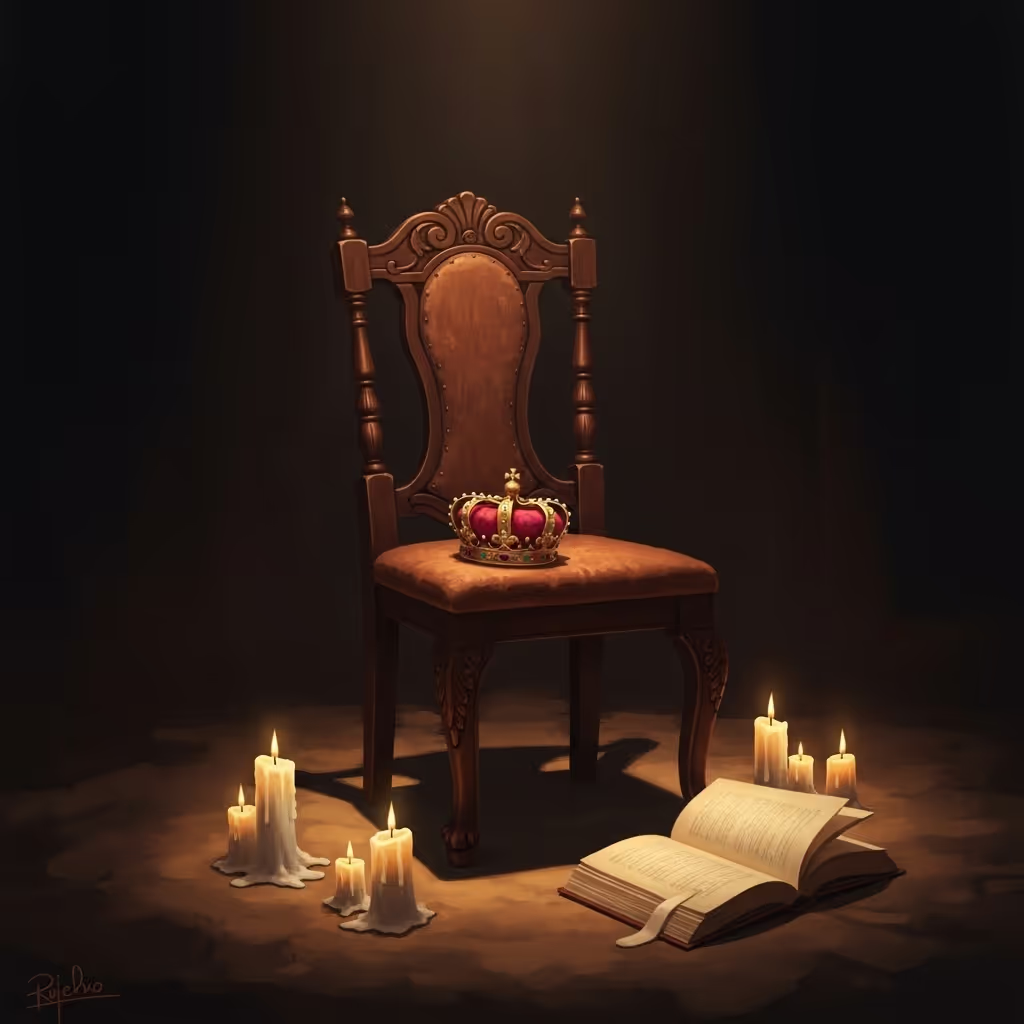
Funny characters in stories have an unusual afterlife. Long after the plot has faded, they remain. A reader who cannot recall the ending of a book will often remember a single line a funny character said — usually the wrong line, delivered at the wrong moment, with complete sincerity.
Parents who read aloud to children frequently notice this effect without naming it. The funny character becomes the one the child asks about first. Not the hero. Not the villain. The one who said the wrong thing at the feast and somehow made it worse by apologizing.
This is the quiet achievement of good comic writing. It does not announce itself. It does not ask to be appreciated. It simply plants something in the reader's memory and leaves it there, occasionally surfacing at inconvenient moments for the rest of their life.
Somewhere in every story worth telling, there is a character who was not supposed to be this memorable. They had a smaller role, a simpler purpose, and absolutely no intention of becoming the person the reader thinks about years later. And yet. The best funny characters in stories have a way of quietly exceeding their brief — arriving with misplaced confidence, departing with perfect timing, and leaving behind something that feels, against all reasonable expectation, remarkably like wisdom. If you have ever found yourself looking for a story where that kind of character gets the space they deserve, it is possible that someone, somewhere, has already written it with exactly that thought in mind.
Readers who enjoy characters who approach impossible situations with misplaced confidence may also enjoy this post about how classic stories take unexpected turns when familiar heroes misread the moment.