
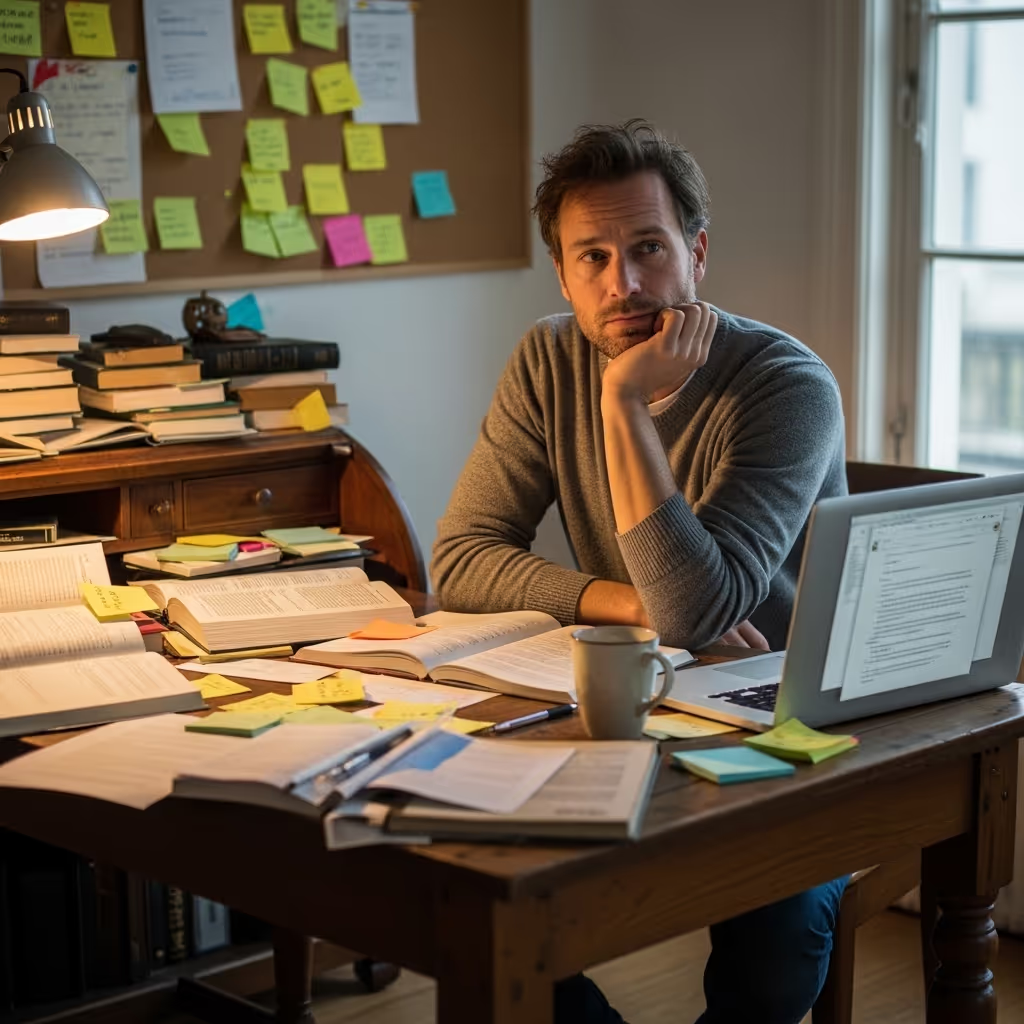
The book exists now. It has a cover, a spine, a first page, and a last one. It can be held, which is a fact that still occasionally requires a moment of quiet verification. But before it existed — before any of that — there was a considerably longer period during which it did not exist and showed very little immediate intention of changing that situation. How long it takes to write a book is a question with a clean, simple shape and a complicated, unhurried answer. It does not begin on the day the first sentence is written. It begins earlier — with an idea that arrives uninvited, usually at an inconvenient moment, and proceeds to make itself at home before anyone has agreed to the arrangement. What follows is not a straight line. It is an accumulation of small decisions, interrupted mornings, and the particular stubbornness required to return, again and again, to a page that is not yet finished.
Every book takes a different amount of time. This is not especially helpful information, but it is accurate, and accuracy on this subject matters more than comfort. What most accounts of the writing process leave out is the portion that does not look like writing — the thinking, the reconsidering, the research that leads somewhere unexpected, the chapter that worked perfectly until it didn't, the ending that was written three times before it became what it needed to be. How long it takes to write a book includes all of that. The word count is only the most visible part of a considerably larger endeavor.
The Work That Happens Before the Writing

A book begins long before the first sentence. This is not a romantic observation — it is a practical one. Characters must be understood before they can be written. A world must have rules before it can be inhabited. A story must know, at least approximately, where it is going before it can begin moving in any direction with confidence.
For an author wearing multiple hats — writing, editing, designing, publishing, managing every corner of the operation — this early stage overlaps with everything else. An outline is drafted between other tasks. A character's voice is tested during a quiet hour that was technically allocated to something different. The story accumulates in fragments, which is a slower process than sitting down and writing from beginning to end, but produces something more considered in the end.
This hidden work is not wasted time. It is the foundation. The pages written on top of it are steadier because of it, and the story is more itself because the author spent time understanding it before committing it to the page.
Why the Timeline Belongs to the Story, Not the Calendar
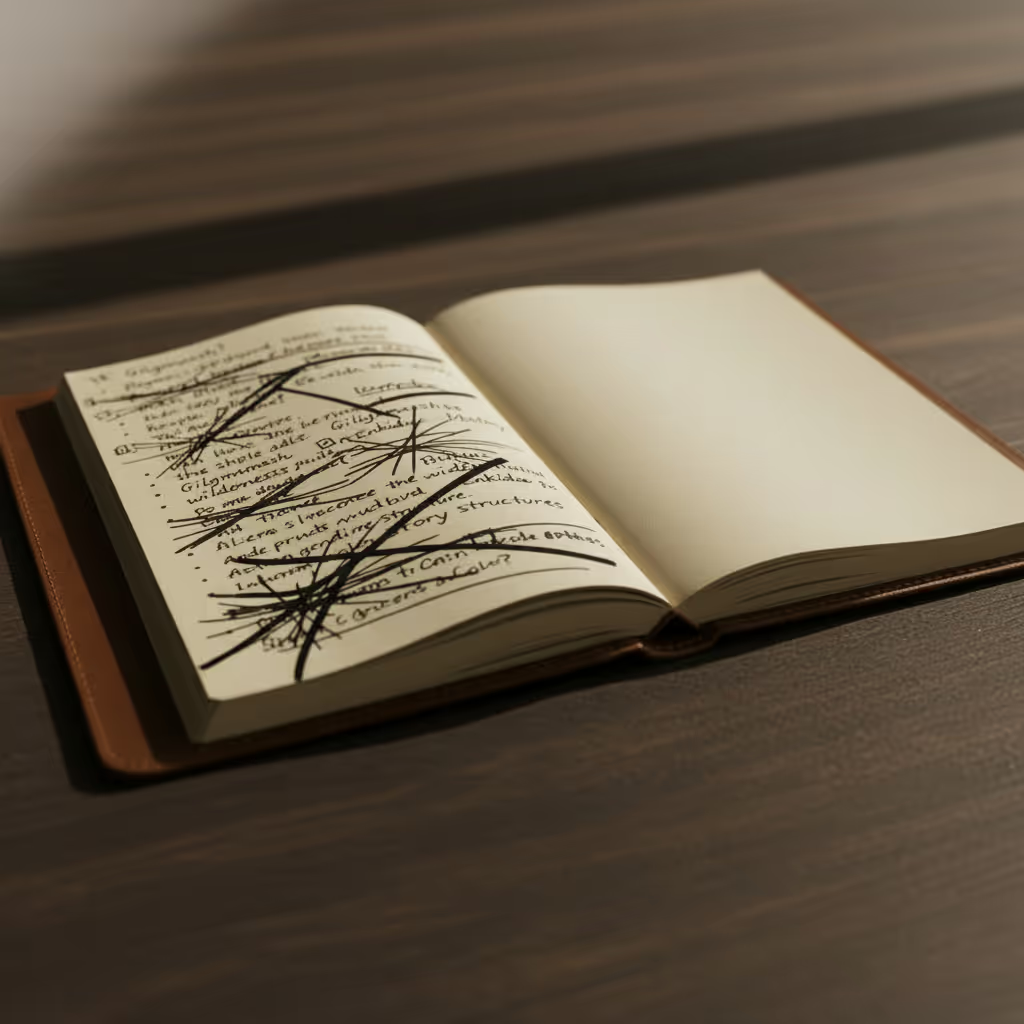
There is a version of how long it takes to write a book that sounds straightforward — a number of months, a daily word count, a completion date. This version exists, and for some writers in some circumstances it is accurate. For most, it is an aspiration that the story declines to honor.
Stories do not observe schedules with any particular consistency. A chapter that should have taken a week takes three, because something in it was not yet right and refused to pretend otherwise. A scene that was dreaded turns out to take an afternoon, because the characters knew what they were doing even when the author was not certain. The timeline stretches and compresses according to the needs of the work rather than the preferences of the calendar.
Writing Dracula Goes Viral involved exactly this kind of negotiation. The story had opinions. Some of them arrived early. Others appeared only when the writing was already underway, requiring adjustments that extended the timeline in ways no schedule had anticipated. This is not a failure of planning. It is the story becoming more itself — which is, in the end, the only direction worth traveling.
What Finishing Actually Means
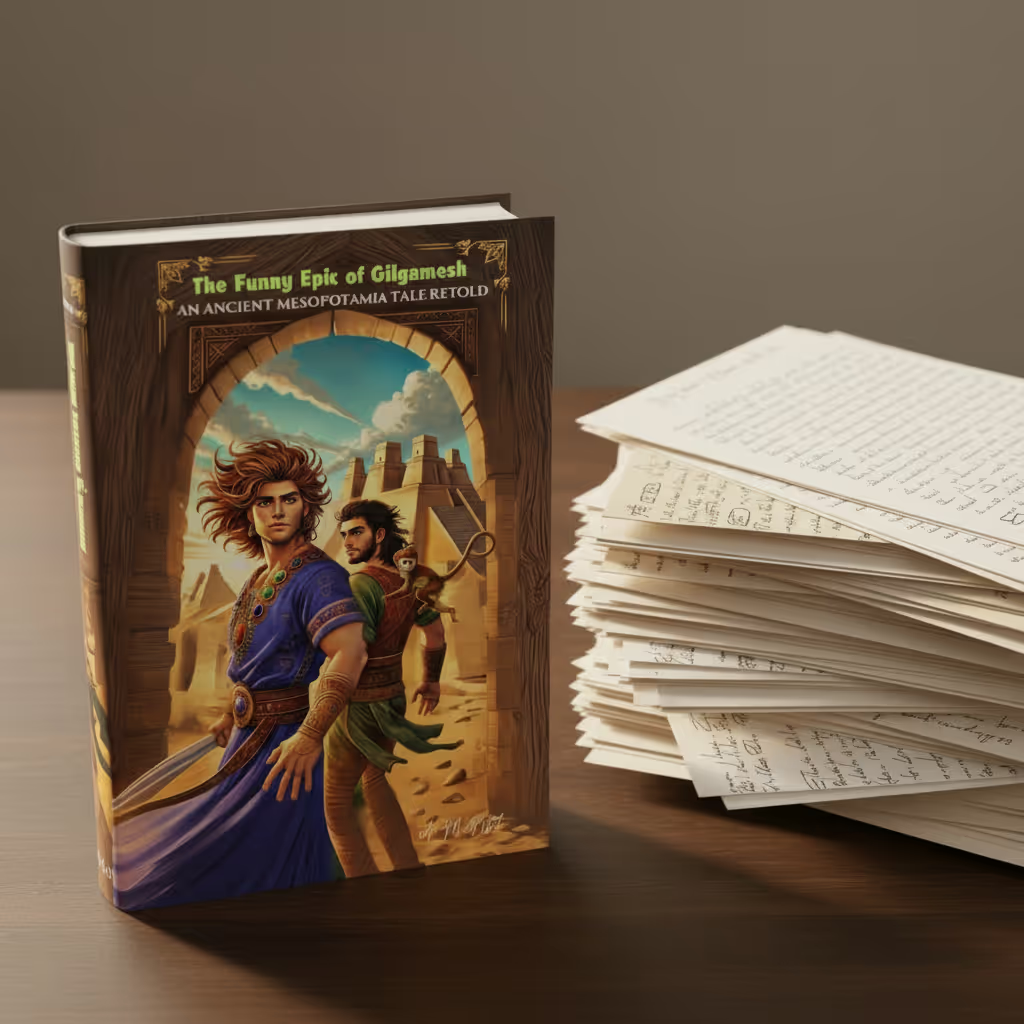
Reaching the final page feels, briefly, like completion. It is not. For an independent author managing every stage of production, the end of the writing is the beginning of a different kind of work — editing, formatting, cover design, metadata, distribution, and the particular discipline required to treat each of these stages with the same seriousness as the writing itself.
Each stage requires a different quality of attention. Writing invites imagination and tolerates uncertainty. Editing demands precision and rewards patience. Formatting requires the kind of careful, methodical focus that is entirely unlike storytelling and entirely necessary. For one person managing all of it, the timeline extends again — not because anything has gone wrong, but because doing things properly takes the time that doing things properly requires.
How long it takes to write a book, honestly accounted for, includes all of this. The writing is the most visible part. But the book that arrives in a reader's hands is the result of every stage — and each stage, attended to with care, is what makes the difference between a book that exists and a book worth reading.
A book that has been written carefully carries the time it took. Not visibly — the reader cannot see the interrupted mornings or the chapters reconsidered at midnight or the ending written three times before it was right. But they can feel it, in the way a story feels considered rather than assembled, inhabited rather than constructed. How long it takes to write a book is, in the end, exactly as long as the story requires — not a day less, and very occasionally, not a day more. The books worth reading tend to have taken precisely that long. The ones worth returning to usually took a little longer than anyone planned, for reasons that turned out, in retrospect, to have been entirely worth it.
Readers curious about the kind of story that emerges from that process may enjoy this post about A Funny Epic? Why This Gilgamesh Is Nothing Like School — where the world built during those long and occasionally stubborn writing sessions finally gets to speak for itself.