
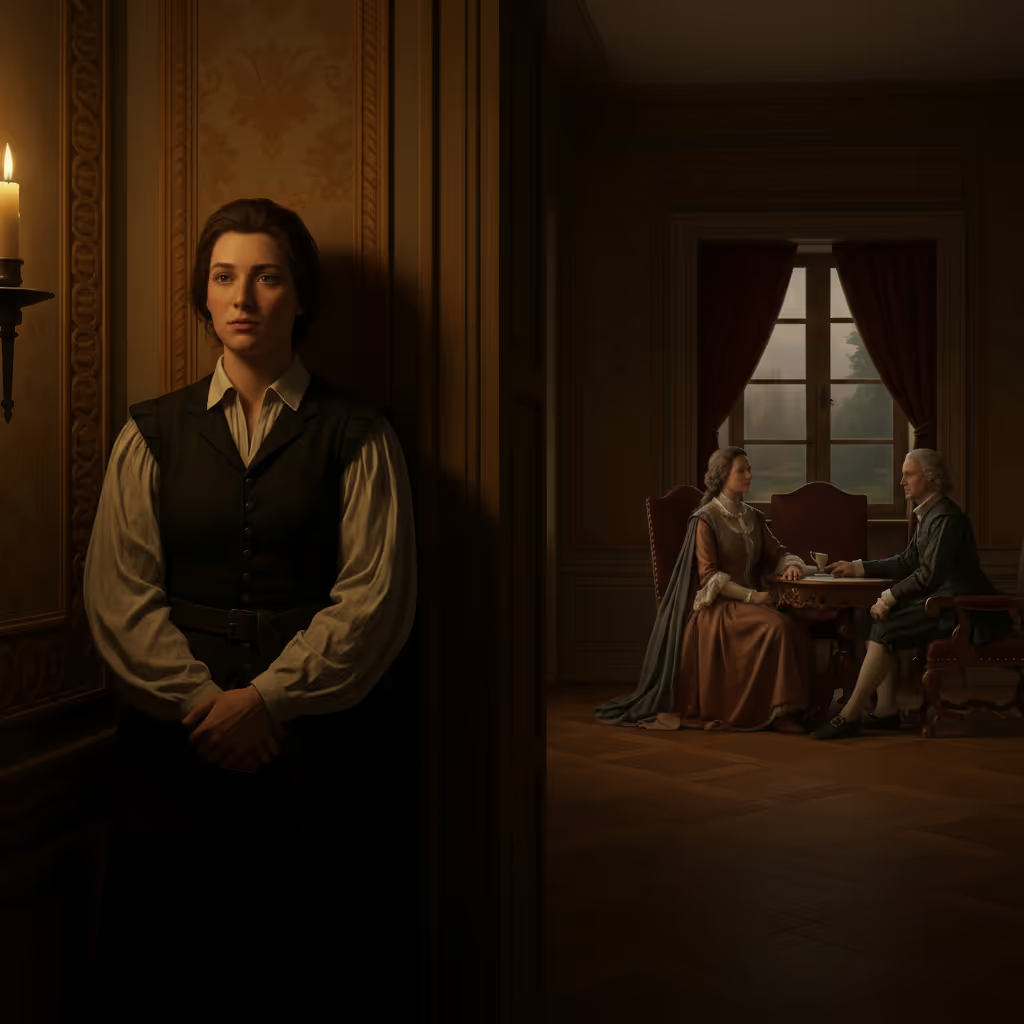
In almost every classic story ever told, there is a person carrying a tray. They move through the background of important scenes with the practiced invisibility of someone who has learned that being noticed is considerably more trouble than it is worth. They pour the wine while the villain explains the plan. They straighten the curtains while the hero receives instructions. They are present at every significant moment and absent from every account of it. The untold perspectives in classic stories belong, more often than not, to the people whose job it was to be in the room without appearing to be in the room — and what they witnessed, had anyone thought to ask, would have made for a considerably more interesting account than the official version.
Classic stories have always had two narratives running simultaneously. The first is the one everyone knows — the hero's journey, the villain's scheme, the love story, the quest. The second belongs to the people who made all of it possible without receiving any of the credit: the servants, the messengers, the minor court officials, the inn staff, the traveling companions who are named once and then forgotten. Untold perspectives in classic stories are not gaps in the narrative. They are complete, fully observed accounts of the same events — told from a position that the main characters never occupied and could not have imagined.
The Person Who Poured the Wine

Every great feast in every classic story has someone whose job it is to make sure the cups stay full. They move around the table with the quiet efficiency of someone who has done this many times before and expects to do it many times again. They hear everything. They see everything. They remember everything, because remembering is part of the job — knowing which guest prefers their wine watered, which one should not be offered a second cup, which conversation to move away from and which one to linger near.
The person who poured the wine at the feast where the plot was set in motion knew the plot was being set in motion before most of the guests did. They noticed the glance exchanged across the table. They heard the word that was spoken too quietly for the hero to catch from his position at the other end. They observed the moment when everything changed and filed it carefully alongside everything else they had observed and were not asked about.
Untold perspectives in classic stories begin here — not with a different hero or a redeemed villain, but with the person who was already in the room and simply never asked to speak. Their account would not contradict the official version. It would complete it, in ways the official version never knew it was missing.
What the Background Character Actually Saw

There is a particular kind of clarity available only to someone who is not a participant in events. The hero is too close to the story to see it whole. The villain is too invested. The wise mentor has an agenda. But the servant refilling the lamp oil in the corner of the room has no stake in the outcome, which means they can observe it with an accuracy that none of the principals can match.
They noticed that the hero hesitated before accepting the quest — a detail that does not appear in any chronicle. They observed that the villain, in an unguarded moment between scenes, looked considerably less certain than the official narrative suggests. They were present for the conversation that took place after the important conversation ended, when everyone else had left and two minor characters said the things that could not be said in front of witnesses.
Untold perspectives in classic stories are compelling not because they overturn the original but because they add the texture the original was too busy to include. The story does not change. The understanding of it does. And understanding a story more completely is, in its quiet way, one of the more satisfying things a reader can do with a tale they thought they already knew.
Why Children Find These Perspectives Immediately Interesting

There is something in the untold perspective that children recognize with particular directness. They are, by the nature of their position in the world, frequently in rooms where important things are happening and not being addressed directly. They hear conversations that pause when they enter. They are present at decisions that affect them without being consulted. They understand, instinctively, what it means to observe something significant from a position that the significant people do not consider significant.
This is why untold perspectives in classic stories land so well with young readers. The servant who knew everything is not an unfamiliar figure to a child. They have been that figure. They know what it is like to be in possession of information that nobody thought to ask for — and they know, with some satisfaction, that the information was worth having.
Writing these perspectives into stories for children requires very little adjustment to the original material. The classic tale remains intact. What changes is the angle of observation — and a story seen from a different angle, it turns out, is almost always a different story. The person carrying the tray has been waiting a very long time for someone to ask what they saw. They have an excellent memory, and they have had considerable time to organize their thoughts.
The official version of any classic story is the version that the important people agreed to tell. It is not inaccurate, exactly. It simply does not include the observations of everyone who was present — which is a considerable omission, given how many people were present and how carefully they were paying attention. Untold perspectives in classic stories have always existed. They were simply never collected, which is a different thing from never being available. Somewhere in the background of every great tale, a figure is setting down their tray, straightening their jacket, and preparing, for the first time, to give their account. It will be thorough. It will be precise. And it will contain at least three details that change everything, delivered with the calm efficiency of someone who has been waiting to be asked for quite some time.
Readers who enjoy stories told from unexpected angles may enjoy this post about when classic stories go wrong and familiar tales take unexpected turns — which explores what happens when the official version of events begins to wobble.