
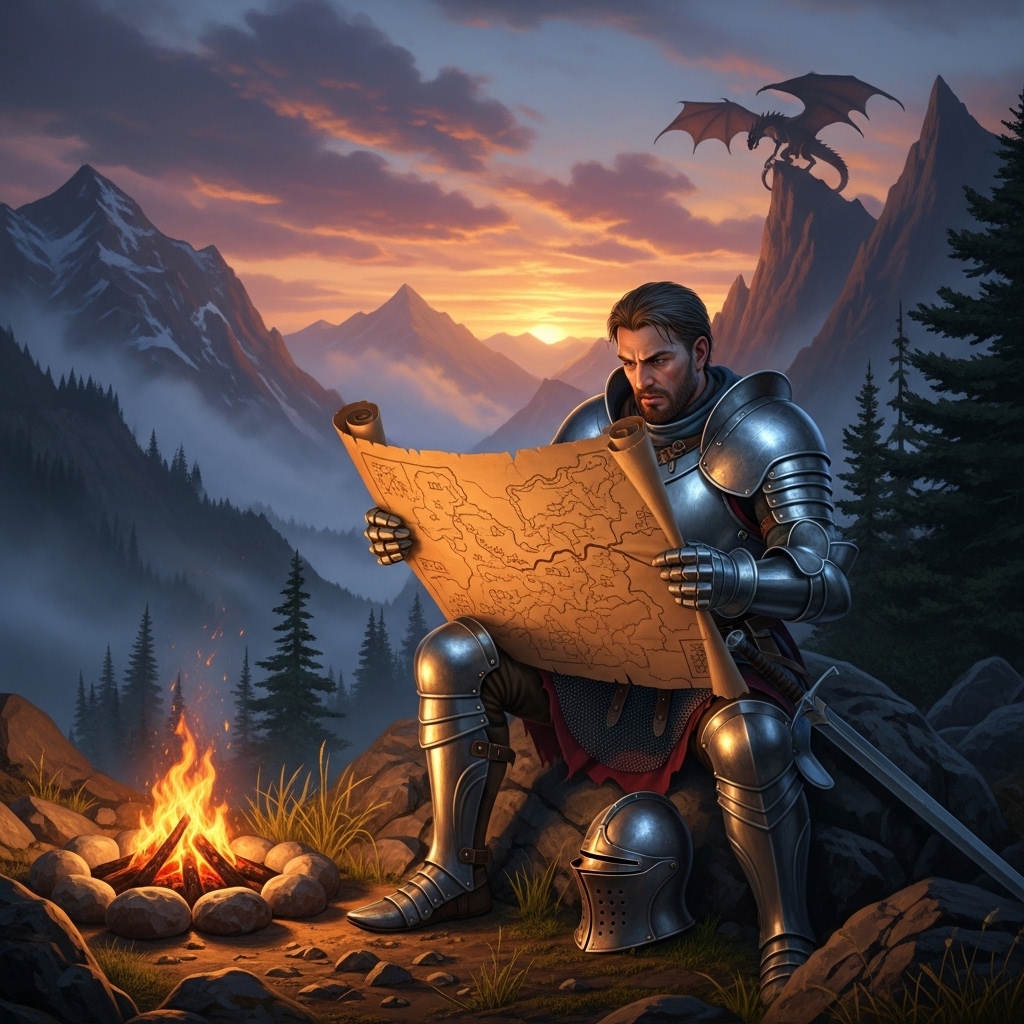
Stories often feel as if they unfold exactly the way they were meant to. The hero receives the quest, the villain prepares a cunning scheme, and every event seems to arrive at precisely the right moment. Yet the truth is that most legendary adventures depend on a long chain of small details going exactly right. Change just one of those details—a misunderstood message, a misplaced map, or a magical object behaving unexpectedly—and the entire tale begins to wobble. Imagining how classic stories can go wrong allows us to peek behind the curtain of familiar legends and see just how fragile those perfectly balanced plots really are.
Classic stories often feel perfectly balanced, as if every character knows exactly when to appear and every event happens at precisely the right moment.
The hero begins the journey at the proper time. The villain reveals a carefully prepared scheme. The magical object appears just when it is needed most.
It all feels wonderfully organized.
But storytelling becomes far more interesting when we start asking a mischievous question: what if something went wrong?
Not disastrously wrong, perhaps. Just slightly wrong.
One misunderstood message. One misplaced map. One villain who speaks a little too confidently.
Suddenly the carefully arranged adventure begins to wobble.
And that wobble is where imagination becomes truly delightful.
Let us explore what might happen when classic stories can go wrong and familiar tales suddenly take unexpected turns.
When the Hero Misunderstands the Quest
Many classic adventures begin with a clear mission.
A messenger arrives with urgent news. A mysterious map appears. A wise mentor explains the challenge ahead.
But imagine the hero hearing only part of the instructions.
Perhaps the hero reads the map but misreads the markings and sets out toward the wrong place.
The journey still becomes an adventure, but it leads through entirely different lands than anyone expected.
Along the way, the hero might encounter new characters, strange towns, or unexpected creatures that were never part of the original plan.
Meanwhile, the real problem still waits somewhere else.
By the time the hero realizes the misunderstanding, the story has already taken several surprising turns.
These moments remind us how easily a grand tale could shift direction. A single misinterpreted message could transform a precise quest into a wandering expedition filled with unexpected discoveries.
And sometimes those detours might lead to adventures far more interesting than the original mission.
When the Wrong Ears Are Listening
Villains in classic stories often rely on secrecy.
Plans are whispered in hidden rooms, maps are spread across heavy tables, and trusted accomplices gather to hear the details of a carefully arranged scheme.
Picture such a meeting taking place late at night.
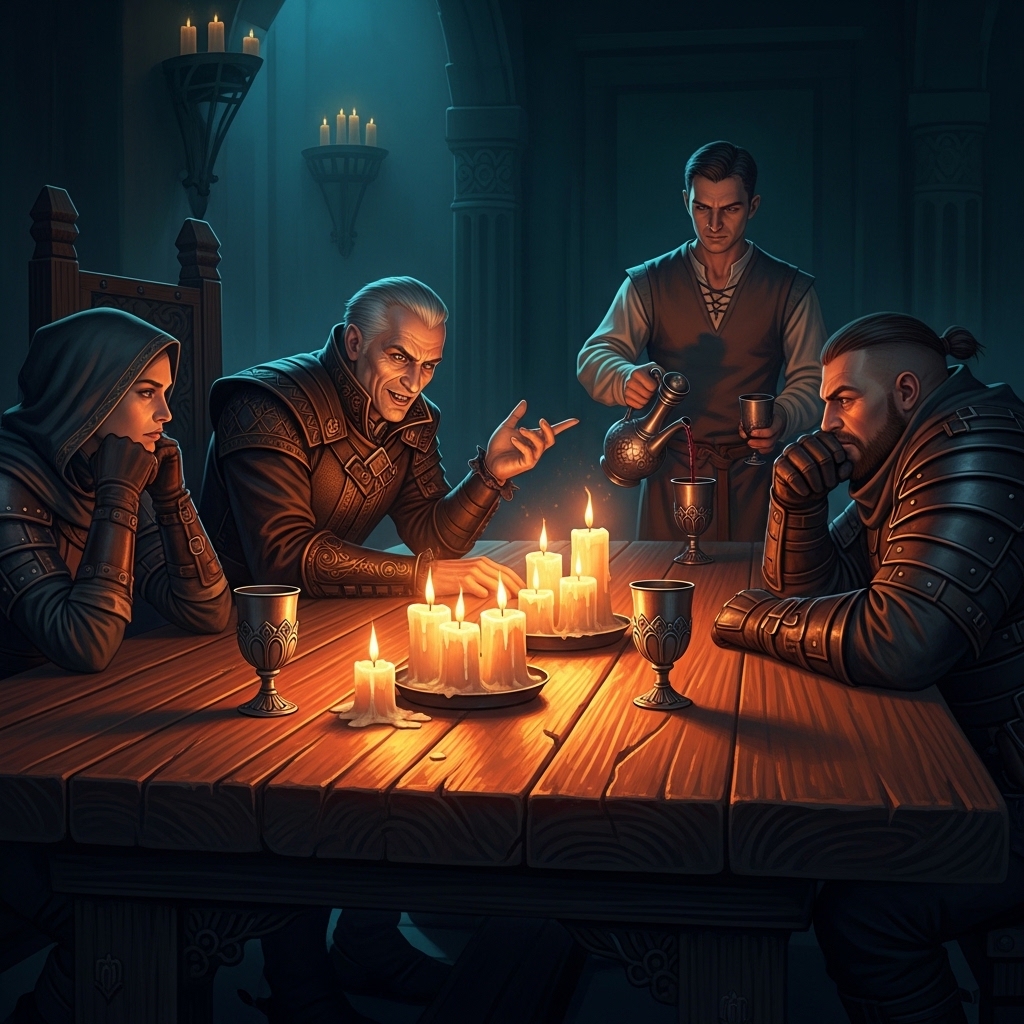
The villain explains the strategy while accomplices lean closer to examine the maps and listen carefully. Every step of the plan is described: where the guards will be distracted, which road the treasure will travel, and exactly when the final move will occur.
Meanwhile, a servant moves quietly through the room pouring wine and refilling cups.
The conspirators barely notice the servant at all.
After all, servants are expected to be invisible.
Yet by the time the meeting ends, the servant has heard every word of the plan. And servants, as many stories have shown, often know more about a household than anyone realizes.
A scheme that seemed perfectly hidden may suddenly become far less secret than the villain intended.
When the Magical Object Has Its Own Ideas
Magical objects often guide the hero toward victory.
An enchanted sword glows when danger approaches.
A ring grants mysterious powers.
A mirror reveals hidden truths.
But what if these legendary objects were slightly less cooperative?
Imagine the mirror answering questions only in riddles so complicated that the hero must solve three puzzles just to understand the first answer.
Or the sword that glowing at the faintest hint of trouble—so often that the hero begins to ignore it.

The hero still possesses a powerful artifact—but learning how to use it becomes its own adventure.
Moments like these turn an ordinary quest into something richer and more unpredictable.
After all, magic has always followed its own peculiar rules.
Stories have always changed as they travel from one generation to the next.
A tale told around a fire centuries ago may sound very different when retold today.
Characters grow.
Details shift.
New ideas appear.
This is part of the magic of storytelling.
Exploring how classic stories can go wrong invites readers to imagine new possibilities within familiar worlds. A hero might misunderstand a quest, a villain might trust the wrong listener, or a magical object might behave in ways no one expected.
Each twist reminds us that stories are not fixed objects. They are living adventures that continue to evolve every time someone tells them again.
Perhaps that is why twisted versions of classic tales can be so much fun to explore.
And sometimes, when things go wonderfully wrong, the story becomes even better than anyone expected.